
Last updated September 23, 2026
Free visual inspection and a written scope of work before any mitigation begins - photos, moisture readings, and drying logs go in your claim file
The scope we write is the scope we bill. Anything new gets shown to you, in writing, before we touch it.
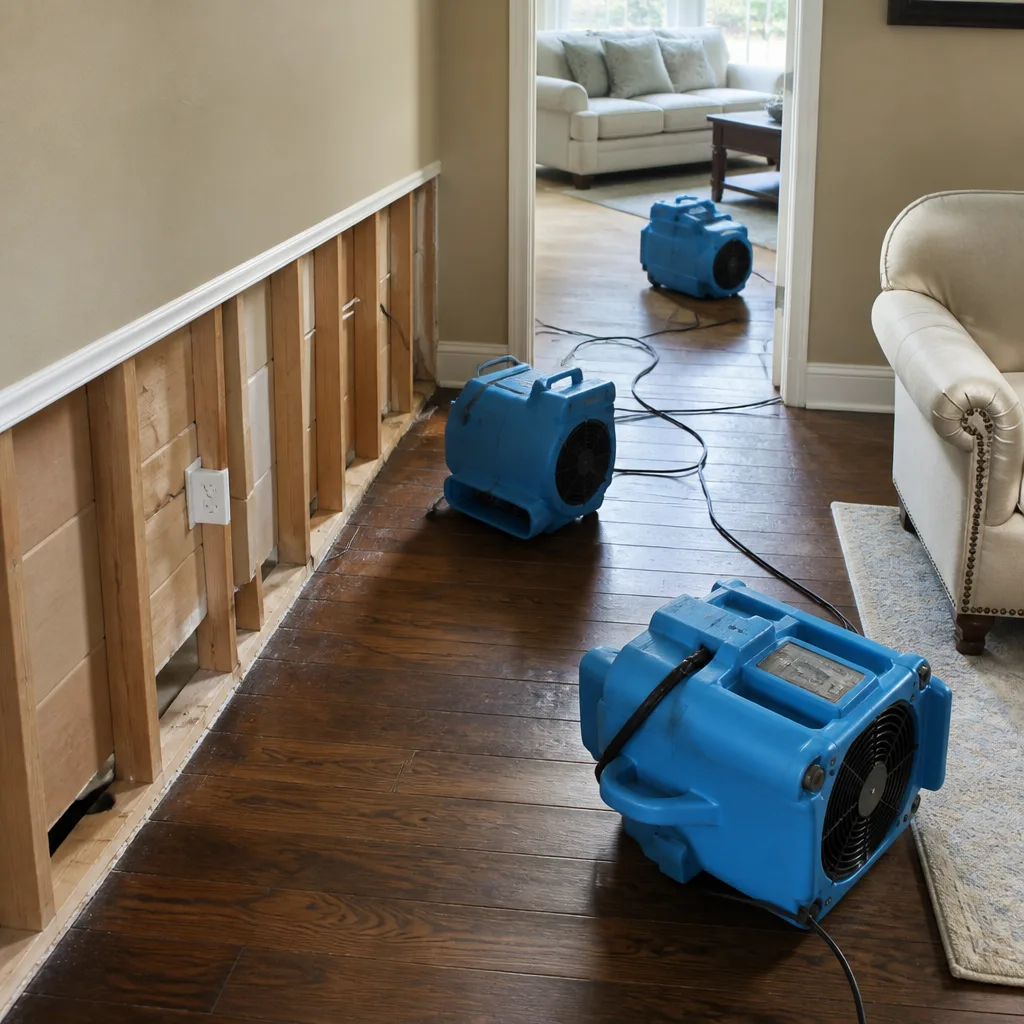
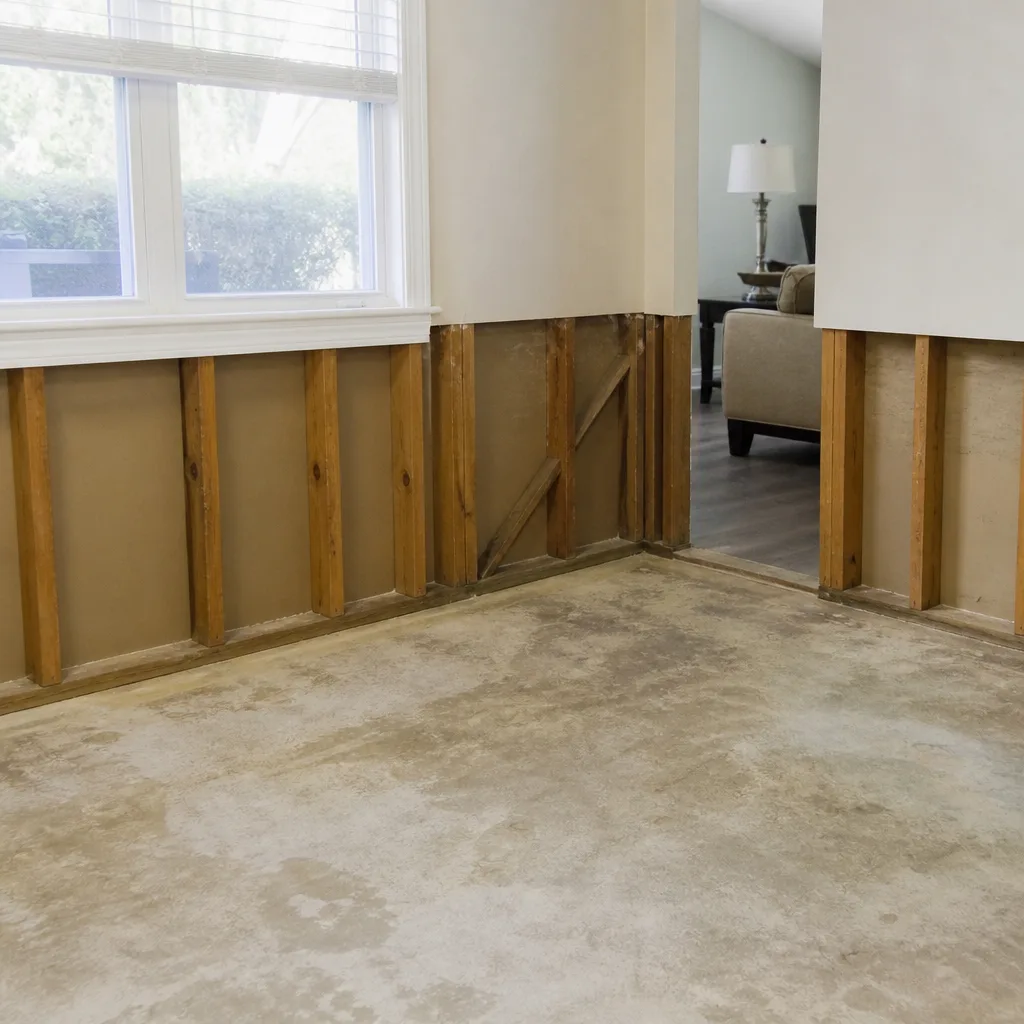

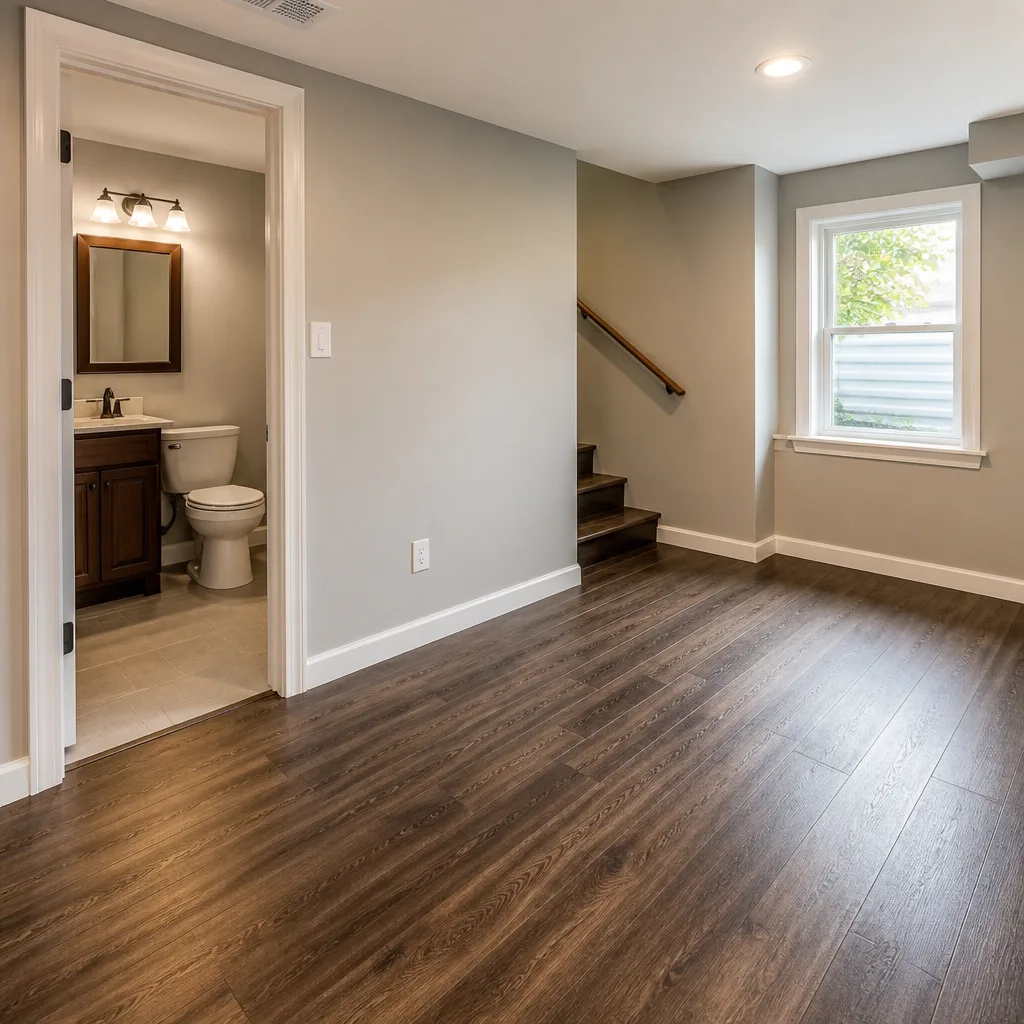

How to Hire a Damage Restoration Contractor in Spring Valley: A Step-by-Step Guide
Nevada law requires a written contract for any home improvement work over $1,000. Yet most emergency restoration jobs in Spring Valley begin with a verbal authorization and a “direction to pay” form that transfers control of your insurance claim to a contractor before you’ve read a single line-item price. In a market where summer monsoons drive flash flooding through the southwest valley and aging HVAC systems in Ranch Springs condos spawn hidden mold, this gap between legal protection and actual practice costs homeowners thousands in uncovered charges, disputed claims, and incomplete drying. This guide teaches you to evaluate restoration contractors on evidence, not presentation.
Quick Answer
To hire a damage restoration contractor in Spring Valley, verify Nevada State Contractors Board licensure for the specific trade, demand a written scope with Xactimate line-item pricing before any work begins, confirm drying logs will be generated with documented psychrometric data, and never sign a direction-to-pay assignment without understanding it transfers your claim rights. The contractor who hands you documentation before equipment enters your home is the contractor who will protect your claim.
Table of Contents
- Step 1: Verify the License - And Know Which One Matters
- Step 2: Demand a Written Scope Before Any Work Starts
- Step 3: Ask Five Questions That Require Measurable Answers
- Step 4: Read Every Emergency Authorization Form Before Signing
- Step 5: Compare Bids Using Xactimate Line Codes
- Step 6: Confirm How Drying Progress Will Be Documented
- Step 7: Understand Direction-to-Pay Before You Sign It
- Common Mistakes to Avoid
- When to Call a Professional
- Frequently Asked Questions
- The Bottom Line
Step 1: Verify the License - And Know Which One Matters
Every restoration contractor working in Spring Valley must hold a license from the Nevada State Contractors Board. But “licensed” is not a binary credential. The board issues classifications that determine what a contractor is legally permitted to do, and in restoration, the wrong license means the contractor cannot legally perform the work they’re bidding.
Here’s what to check:
- Class B General Building Contractor: Required for structural repairs, reconstruction, and any work involving load-bearing walls or framing. If your Spring Valley home needs drywall replacement, subfloor repair, or reconstruction after fire damage, the contractor must hold this classification or subcontract to someone who does.
- Class B-2 Painting and Decorating Contractor: Permits surface finishing, cosmetic repairs, and light restoration. Many water damage contractors in the Las Vegas Valley hold only this license, which does not authorize structural drying equipment placement, demolition, or reconstruction. A contractor with B-2-only cannot legally perform full-service restoration.
- Class C-14 Flooring and Floor Covering Contractor: Required for subfloor and hardwood restoration.
- Class C-20 Warm Air Heating, Ventilating and Air Conditioning Contractor: Needed for HVAC-related moisture and mold issues, common in Spring Valley’s older split-system installations.
To verify, visit nscb.nv.gov and enter the contractor’s license number. Check three things: status (must read “Active”), classification (must match the work proposed), and disciplinary history. A suspended license or recent complaint resolution is a disqualifier.
In Spring Valley specifically, we’ve seen contractors operate under a B-2 license while performing full demolition and reconstruction in The Pueblo and Paradise Valley Ranch neighborhoods. This exposes homeowners to liability if a worker is injured or if the work fails inspection. The Nevada State Contractors Board maintains a residential recovery fund, but claims are only valid against properly licensed contractors performing work within their classification.
Ask directly: “What is your NSCB license number, and which classifications does it include?” Then verify it yourself. A contractor who hesitates or redirects to “years of experience” is telling you something measurable.
Step 2: Demand a Written Scope Before Any Work Starts
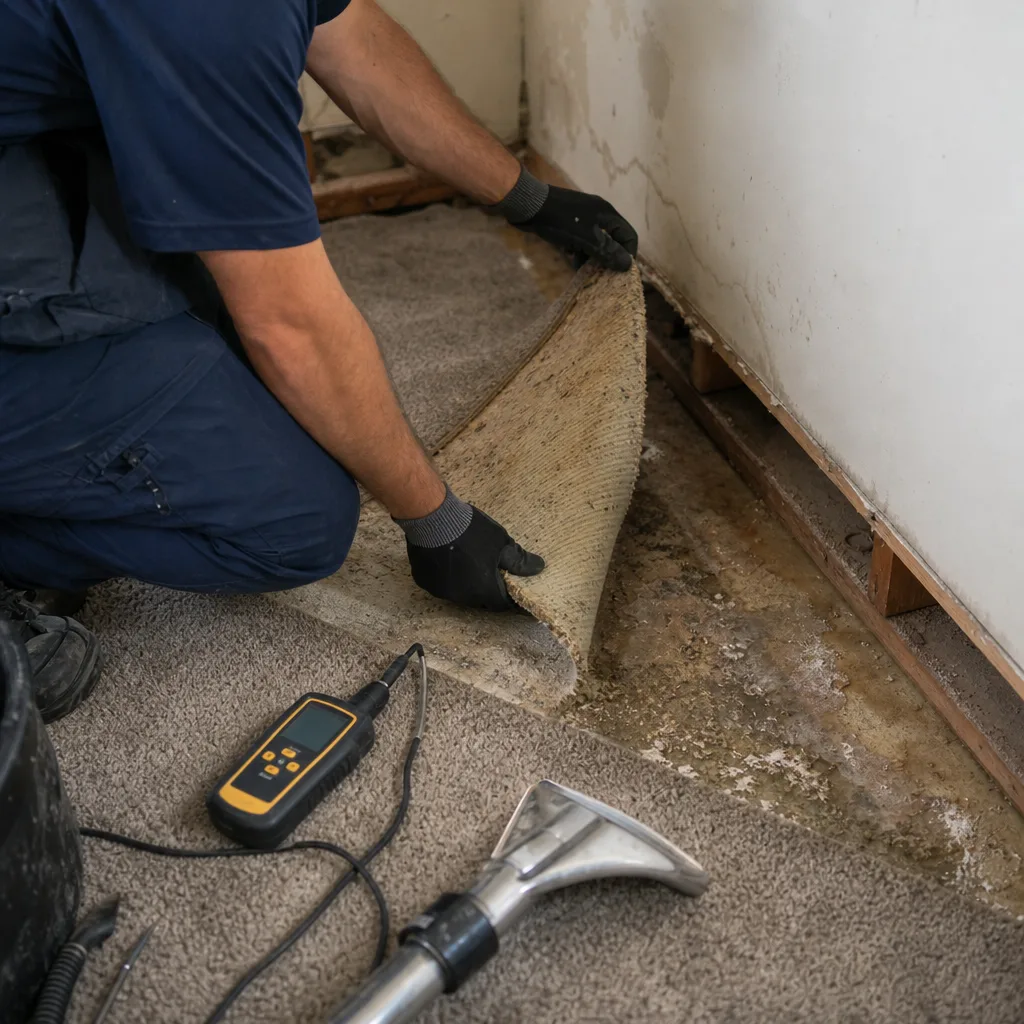
Haven Standard, Clause 1: a written price before work begins, every time, with no exceptions. This is not a marketing preference. It is the documentation standard that separates restoration from speculation.
A proper written scope for Spring Valley restoration work includes:
- Room-by-room moisture readings with meter type and calibration date
- Affected square footage calculated with laser measurement, not estimation
- Material classification by trade name (Category 1, 2, or 3 water; Class 1-4 moisture intrusion)
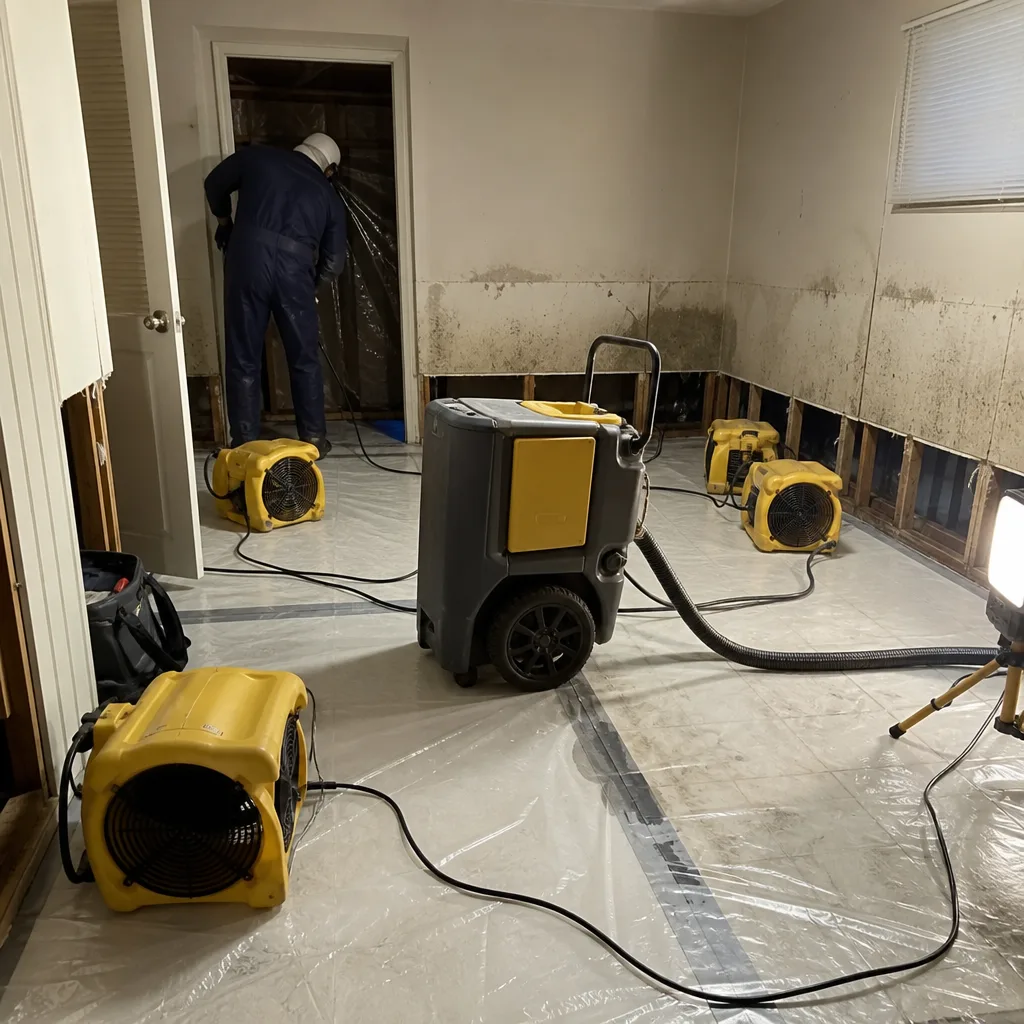
- Equipment placement plan with dehumidifier capacity in pints per day and air mover CFM ratings
- Line-item pricing with Xactimate codes, not lump-sum figures
- Timeline with daily inspection schedule and psychrometric targets
The “psychrometric data” referenced here is the measurement of temperature, relative humidity, and vapor pressure differential that determines whether materials are actually dry or merely surface-dry. A contractor who cannot explain these terms in plain language cannot document drying progress to insurance standards.
In Spring Valley’s arid climate, contractors sometimes assume rapid surface drying equals complete restoration. This is incorrect. The low ambient humidity accelerates evaporation from the surface while trapping moisture in wall cavities and subfloors. We’ve documented cases in the Desert Inn Estates area where contractors declared jobs “dry” based on surface readings, only for mold to colonize behind baseboards six weeks later. The written scope must specify where moisture readings will be taken, not just what the readings are.
Never accept “we’ll write it up after we get started.” Equipment placement is a commitment to a specific drying plan. Without that plan in writing, the contractor can add charges for “additional drying days” that were foreseeable from the initial assessment.
Step 3: Ask Five Questions That Require Measurable Answers
Testimonials and star ratings measure satisfaction, not competence. These five questions force documentation:
- “What software do you use to generate your drying logs, and can I see a sample?” Professional contractors use proprietary or industry-standard platforms (Dri-Eaz’s TrackSmart, Phoenix’s documentation systems, or equivalent) that timestamp readings, photograph meter displays, and calculate grain depression automatically. A handwritten log or spreadsheet is not auditable and will be rejected by most insurance adjusters.
- “What was the last moisture reading you documented in a Spring Valley home with similar construction, and what was the drying timeline?” This tests whether the contractor understands local building stock. Spring Valley’s 1970s-1990s tract homes in areas like Spring Valley Ranch and Beverly Green used different wall assemblies than newer construction. A contractor who cannot reference specific local experience is extrapolating.
- “What dehumidifier capacity will you deploy, and how did you calculate that load?” The answer should reference AHAM-rated pint removal at 80°F/60% RH, not “we’ll bring what we need.” Undersized equipment extends drying and inflates daily rental charges.
- “Will your technicians be background-checked, uniformed employees, or subcontractors?” The answer should be specific: named individuals with license verification, not “our crew.” At DryMark Restoration Spring Valley home, every technician is verified before arrival.
- “What does your warranty cover, and where is it written?” Vague “satisfaction guarantees” are unenforceable. The Haven Standard’s 365-Day Done Right Promise is a signed document with specific remedy language, not a verbal assurance.
A contractor who answers these with specifics, trade vocabulary, and documented examples is demonstrating E-E-A-T: experience, expertise, authoritativeness, and trustworthiness. A contractor who deflects to “we’ve been doing this for years” is selling confidence, not evidence.
Step 4: Read Every Emergency Authorization Form Before Signing
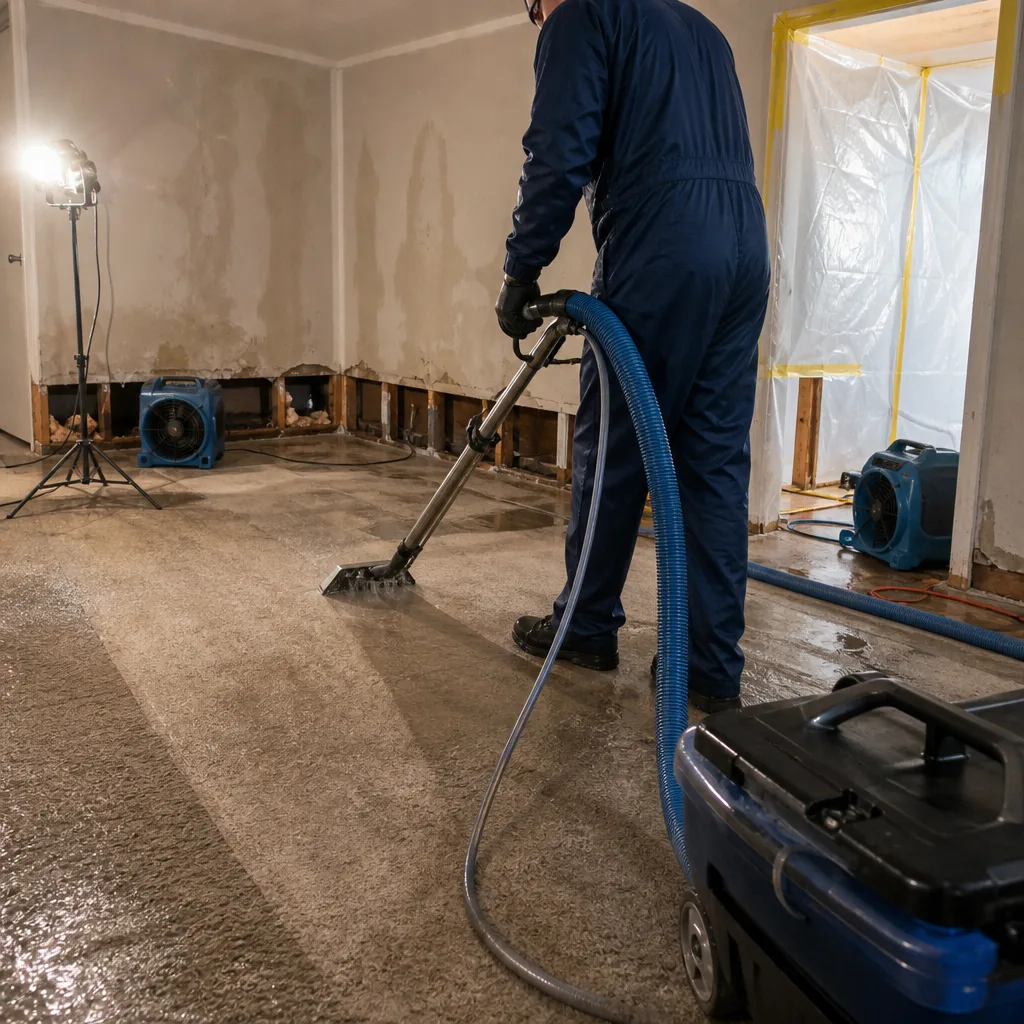
Emergency situations compromise judgment. Contractors know this. The authorization form presented at 2 a.m. while water is spreading through your Spring Valley kitchen is often the most important document in the entire claim, and it is rarely read carefully.
Three red flags to identify:
- Open-ended pricing language: Phrases like “not to exceed” without a specific dollar cap, or “time and materials” without hourly rates and markup percentages disclosed. This violates Haven Standard, Clause 1.
- Automatic lien rights: Nevada permits mechanics’ liens, but a form that grants lien rights before work begins, or that applies lien rights to disputed insurance payments, places your home at risk regardless of work quality.
- Waiver of second opinion: Any clause stating that signing the form prevents you from obtaining another estimate or that “insurance has approved” the contractor. Insurance companies do not approve contractors; they approve scopes of work. A contractor who claims otherwise is misrepresenting the relationship.
In Spring Valley, we’ve reviewed authorization forms from out-of-town contractors who follow storm chasing operations. These forms frequently include forum selection clauses requiring disputes to be resolved in the contractor’s home state, or binding arbitration with fee-shifting provisions that make challenge economically impossible.
Your right: take the form, photograph it with your phone, and state that you will sign after reading in daylight or after consultation. A legitimate contractor in an emergency will begin emergency mitigation (water extraction, containment) under a limited authorization for specifically described work at a specific price, with full scope to follow. A predatory contractor will pressure immediate signature of an open-ended agreement.
Step 5: Compare Bids Using Xactimate Line Codes
Xactimate is the pricing database used by most insurance carriers and professional restoration contractors. It assigns specific codes to every unit of work: WTR-DEH for dehumidifier placement, WTR-DRY for drying labor, WTR-EXTR for water extraction. When contractors use these codes, you can compare bids line by line. When they use proprietary descriptions or lump sums, you cannot.
Here’s how to force comparability:
- Request that every bid reference Xactimate line codes for each item.
- Verify that quantities match: if one contractor lists 3 air movers and another lists 6 for the same room, ask for the calculation basis (typically 1 per 50-70 square feet of affected area, adjusted for Class of water loss).
- Check equipment rates against Xactimate’s published rental rates for Clark County. Significant deviations should be explained.
- Confirm that labor rates include burden (taxes, insurance) or are listed separately. Mixing these between bids invalidates comparison.
- Verify that overhead and profit (typically 10% each for restoration, 20% for reconstruction) are applied consistently or disclosed if omitted.
Spring Valley’s market has seen an influx of contractors using “cash pricing” below Xactimate rates, then adding undocumented charges during the job. A bid at 60% of Xactimate with no explanation is not a bargain; it is a scope that will expand. Conversely, a bid at 140% of Xactimate without justification is exploiting insurance coverage limits.
At Water Damage Restoration in Spring Valley, we provide Xactimate-coded scopes as standard practice. Our Free Second Opinion service will review any competitor’s written estimate at no charge, line by line, to identify missing items, inflated quantities, or inappropriate codes.
Step 6: Confirm How Drying Progress Will Be Documented
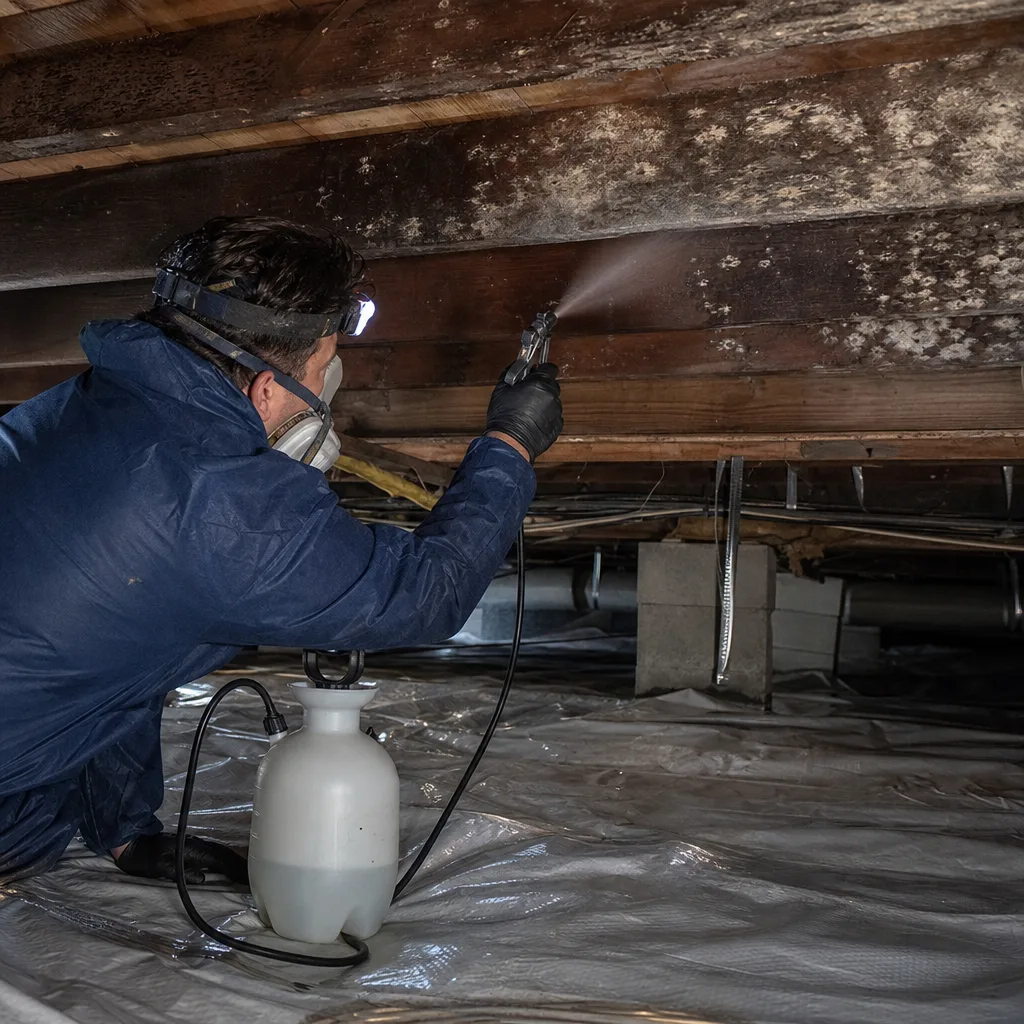
The difference between a paid claim and a disputed claim often lies in the drying log. Insurance adjusters review these documents to verify that drying was necessary, that equipment was justified, and that charges align with actual progress.
A professional drying log includes:
- Daily psychrometric readings: temperature, relative humidity, and specific humidity measured with calibrated meters
- Moisture content readings for affected materials, with meter type and depth penetration specified
- Photographs of meter displays with date stamps, not generic room photos
- Equipment inventory with serial numbers and runtime hours
- Technician signature and license number
- Goal metrics and criteria for equipment removal
The “vapor pressure differential” mentioned in professional documentation is the difference between the vapor pressure in the affected material and the vapor pressure in the surrounding air. When this differential approaches equilibrium, drying is complete. A contractor who removes equipment based on “looks dry” or “feels dry” is practicing guesswork that insurers reject.
Spring Valley’s hard water and alkaline soil create specific documentation needs. Water from municipal sources carries mineral content that leaves residue on surfaces and in carpet padding. A proper drying log notes pre-existing conditions and documents cleaning steps, not just drying. Without this, insurers may classify residue damage as pre-existing and deny related claims.
Equipment brands matter for documentation reliability. Systems from Dri-Eaz, Phoenix, and XPOWER include data logging capabilities that integrate with documentation software. Consumer-grade equipment from big-box retailers does not produce auditable records and should not be used for insurance-claimable work.
Step 7: Understand Direction-to-Pay Before You Sign It
A direction-to-pay or assignment of benefits (AOB) transfers your right to insurance proceeds directly to the contractor. In some states, this has been restricted or prohibited due to abuse. Nevada permits it, but with significant risks to the homeowner.
When direction-to-pay is appropriate:
- The scope is fully documented, priced, and agreed before work begins
- The contractor has provided a written guarantee of work quality independent of payment
- The homeowner retains the right to dispute charges and to obtain a second opinion
- The assignment is limited to the approved scope, with excess funds reverting to the homeowner
When direction-to-pay is predatory:
- The form is presented as “standard” or “required by insurance”
- The assignment includes all policy proceeds, not just the restoration scope
- The contractor controls all communication with the adjuster, preventing homeowner oversight
- The form includes attorney fee provisions that make dispute prohibitively expensive
In Spring Valley’s competitive restoration market, some contractors use direction-to-pay as a customer acquisition tool, offering to “handle everything” with the insurer. This sounds like service; functionally, it removes the homeowner’s leverage to withhold payment for incomplete or defective work. The contractor already has the money; the dispute becomes the homeowner’s problem.
Haven Standard, Clause 1 exists precisely to prevent this dynamic. A written price before work begins means the homeowner knows the maximum exposure before committing. The 365-Day Done Right Promise provides recourse if work fails, regardless of who holds the insurance check.
At Mold Remediation in Spring Valley, we do not require direction-to-pay. We document, we bill, we provide the records you need for direct reimbursement. The choice of payment arrangement remains yours.
Common Mistakes to Avoid
- Assuming “licensed and insured” means fully qualified. Verify the specific NSCB classification against the work proposed. A B-2 painter cannot legally reconstruct your Spring Valley home after a fire.
- Accepting phone estimates for emergency work. Without moisture mapping and material inspection, any price is speculative. The low phone estimate becomes the high final invoice once “unforeseen conditions” appear.
- Signing forms under pressure without retention. Photograph every document before signing. Nevada law requires contractors to provide copies; ensure you receive them immediately, not “by email tomorrow.”
- Ignoring Spring Valley’s specific risks. The area’s hard water, summer monsoon patterns, and aging infrastructure in neighborhoods like Charleston Heights create predictable damage profiles. A contractor unfamiliar with local conditions will miss pre-existing vulnerabilities that affect scope.
- Comparing bids without common units. Three bids with three different description formats cannot be compared. Demand Xactimate coding or equivalent standardized language.
- Failing to verify equipment is professional-grade. Rental dehumidifiers from hardware stores lack the capacity and documentation features of Dri-Eaz or Phoenix systems. Ask for equipment model numbers and verify specifications.
- Neglecting to confirm who performs the work. Subcontracted crews may not be background-checked, uniformed, or covered under the contractor’s license. The named contractor may never visit your Spring Valley property.
When to Call a Professional
Call immediately when water intrusion exceeds what a wet-dry vacuum and household fans can address, when mold is visible or suspected based on musty odor, when fire damage involves structural compromise or smoke odor penetration, or when sewage backup presents biological hazard. In Spring Valley, monsoon season flash flooding from July through September and winter pipe failures in uninsulated attic spaces are the most common triggers - see our Seasonal Damage Restoration Care for Spring Valley: Year-Round Homeowner’s Guide for prevention strategies.
DryMark Restoration Spring Valley offers free estimates in Spring Valley - call (702) 430-2725. Our live dispatch answers 24 hours a day, 7 days a week, with no voicemail on emergency lines. Every assessment includes moisture mapping, a written scope with Xactimate line-item pricing, and a photo record before any equipment is placed.
Frequently Asked Questions
Typical residential water damage restoration in Spring Valley ranges from $1,200 for limited Category 1 extraction and drying to $8,500+ for whole-house Class 3 or 4 losses with reconstruction. Category 3 sewage losses command premium rates due to protective equipment and disposal requirements. Call (702) 430-2725 for an exact quote - estimates are free.
Coverage depends on your policy’s water damage provisions, deductible, and whether the loss was sudden and accidental versus gradual. Most Spring Valley homeowners’ policies cover sudden pipe failures and storm intrusion but exclude gradual leaks and maintenance-related damage. We provide photo-documented assessments and direct adjuster coordination to support your claim - our documentation standards were built by a former adjuster who understands what carriers require for payment.
For emergency water and sewage mitigation, legitimate Spring Valley contractors dispatch within 60-90 minutes during business hours and 2-4 hours overnight. Reconstruction and non-emergency mold remediation are scheduled, not dispatched, and should not be promised for same-day start. Ask specifically whether the response time quoted is for assessment, mitigation start, or full crew deployment - these are different commitments.
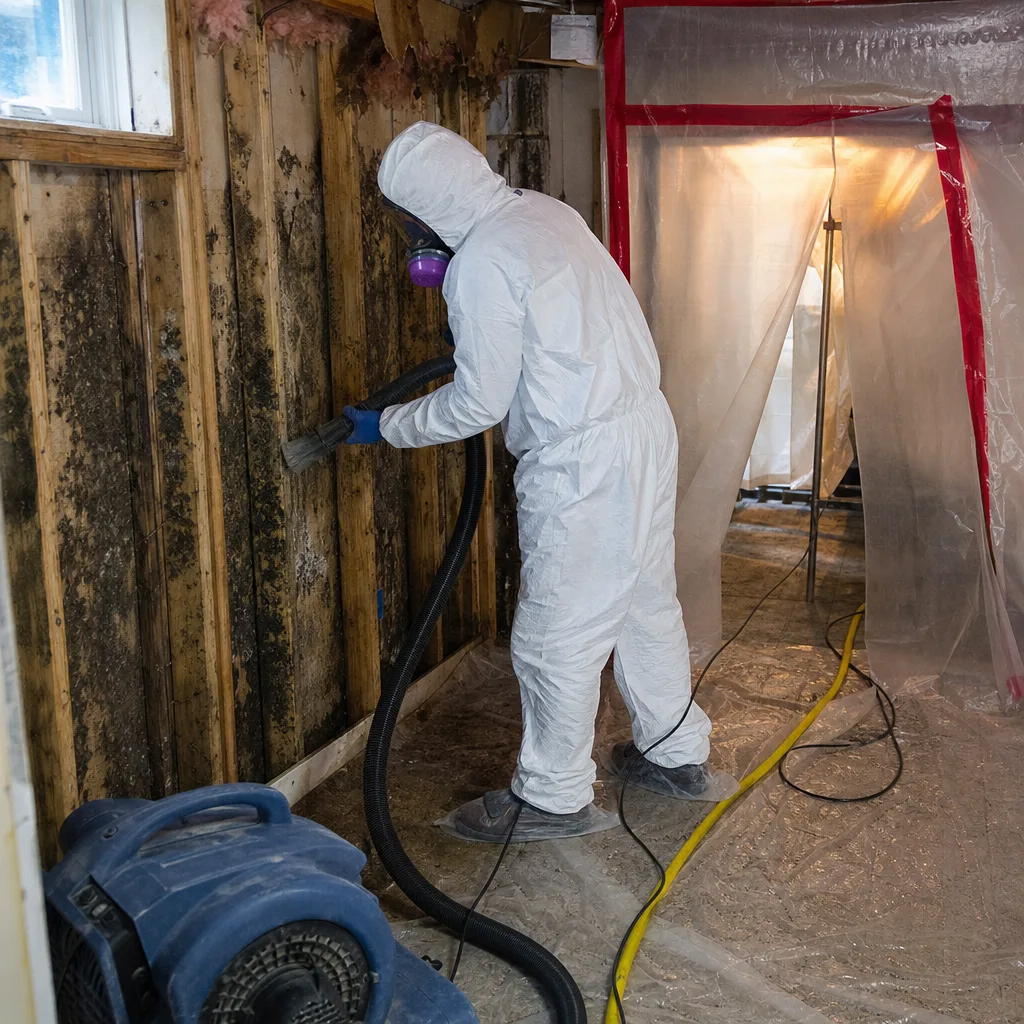
Visible mold growth exceeding 10 square feet, mold resulting from Category 2 or 3 water damage, or mold in HVAC systems requires professional remediation per EPA and IICRC guidelines. DIY cleaning of surface mold on non-porous materials is possible with proper PPE, but Spring Valley’s low humidity can mask hidden colonization in wall cavities that professional moisture mapping reveals. Our Mold Remediation in Spring Valley includes containment, negative air pressure, and post-remediation verification - documentation that protects resale value and insurance claims.
You retain that right unless you sign it away. A contractor can coordinate documentation and present scope, but the adjuster works for your insurer, not the contractor. Be wary of any contractor who insists on exclusive adjuster communication or who claims the adjuster “approved” them. At DryMark Restoration Spring Valley, we provide you with complete documentation packages for direct submission, and we coordinate with adjusters only at your direction.
Document everything: photographs of work performed, equipment on site, and any communications. Request an immediate written scope with line-item pricing. If refused, contact the Nevada State Contractors Board to file a complaint and consider consulting an attorney before signing any additional documents. Nevada’s residential recovery fund may provide recourse if the contractor was properly licensed, but recovery is capped and requires board action first.
The Bottom Line
The contractor who will hand you a written scope, a line-item price, and a documented drying plan before equipment enters your Spring Valley home is the contractor who will protect your property, your claim, and your legal rights. For more guides & resources, visit our blog. Everything else - reviews, years in business, fleet size - is secondary to this evidence standard. Verify the license. Read every form. Compare bids in common units. And never surrender control of your insurance claim without understanding exactly what you’re signing.
Written by Alicia Brennan, Owner at DryMark Restoration Spring Valley, serving Spring Valley since 2011.