
Last updated September 23, 2026
Free visual inspection and a written scope of work before any mitigation begins - photos, moisture readings, and drying logs go in your claim file
The scope we write is the scope we bill. Anything new gets shown to you, in writing, before we touch it.
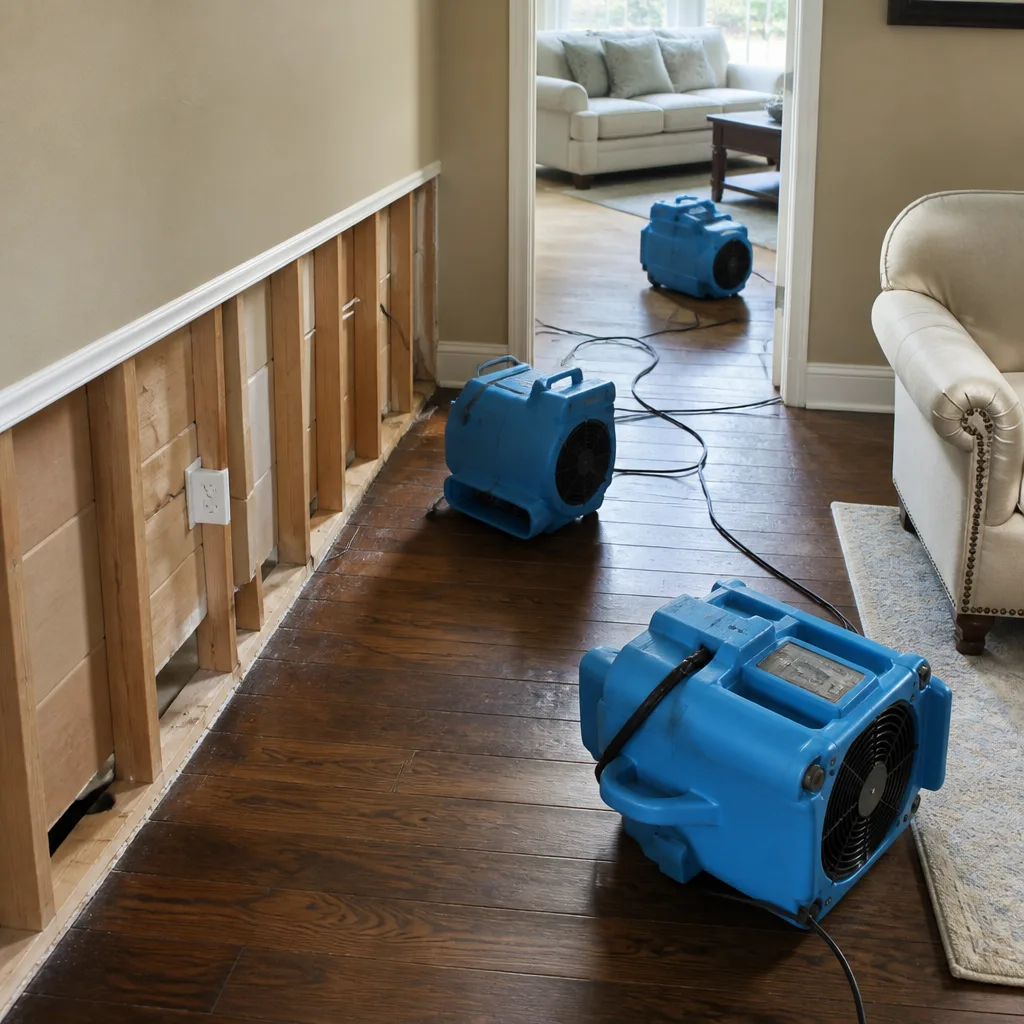
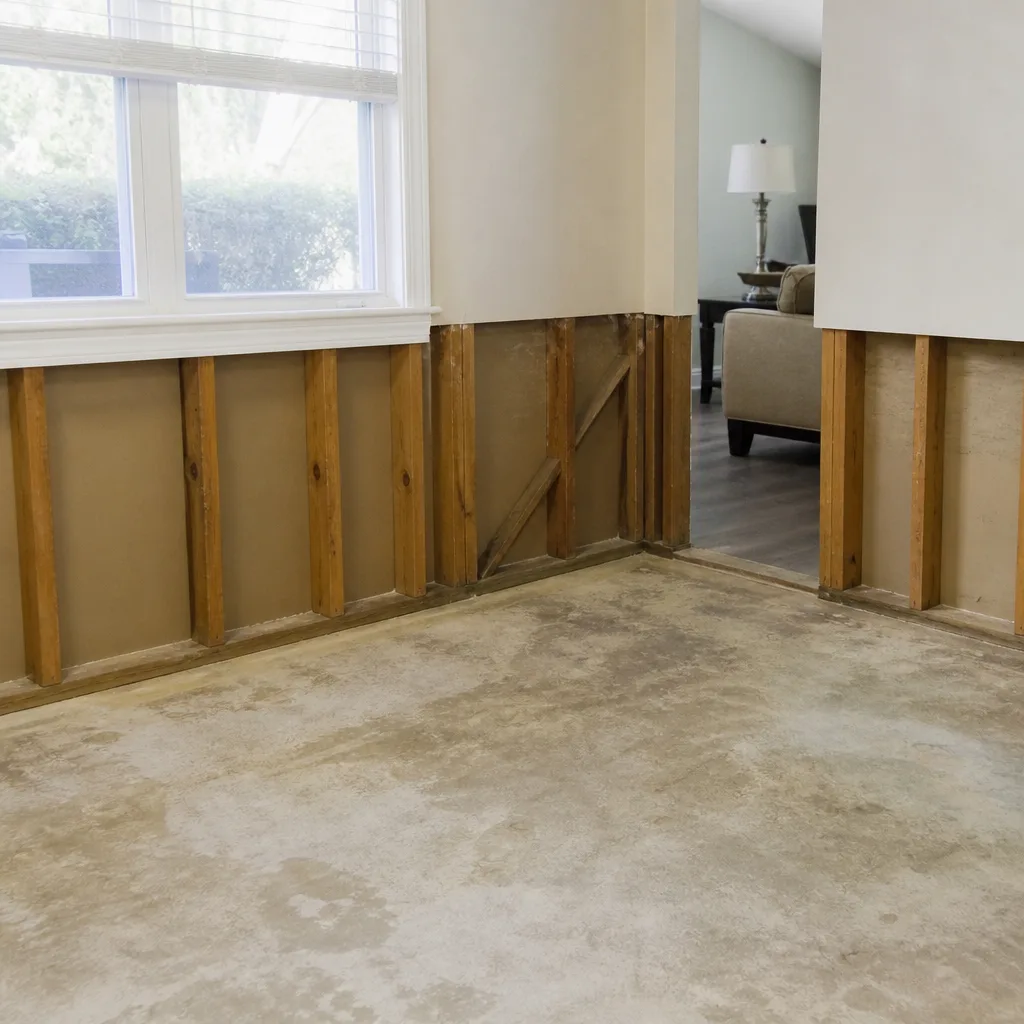
The Complete Guide to Damage Restoration in Spring Valley
Nevada’s average denied water damage claim isn’t rejected because the damage was fake. It’s rejected because the contractor’s drying logs show fewer moisture readings than the invoice shows billable days. In Spring Valley, where desert humidity baselines run 15-25% lower than national IICRC reference charts, that documentation gap costs homeowners thousands in out-of-pocket reconstruction.
This guide maps every phase of damage restoration against the paper trail required to close those gaps, and you can find more guides & resources on our blog. You’ll learn what documents must exist before, during, and after each restoration stage; how Spring Valley’s climate affects drying timelines; what makes a scope of work legally enforceable in Nevada; and the exact sequence insurers use to audit claim files. Whether you’re facing water damage, mold, fire, or storm impact, the information here protects both your property and your claim.
Quick Answer
Damage restoration in Spring Valley is the documented process of returning a property to pre-loss condition through water extraction, structural drying, contamination removal, and reconstruction, with every phase recorded to IICRC standards and supported by a written scope, photo record, and moisture log that an insurer can audit without dispute. A properly documented restoration in Spring Valley typically requires 3-5 days for water damage mitigation, 1-3 days for mold remediation assessment and containment, and 2-6 weeks for full reconstruction, with timelines shortened or extended based on the property’s specific materials, the season’s humidity baseline, and the completeness of the contractor’s daily documentation.
Table of Contents
- What Damage Restoration Actually Involves
- The Documentation Gap: Why Most Claims Fail
- Phase by Phase: What Happens and What Paper Must Exist
- Spring Valley’s Desert Climate and Your Drying Timeline
- What ‘Scope of Work’ Means in Nevada Contractor Law
- How Insurers Audit Claim Files: The Sequence
- Equipment Standards That Separate Defensible Work from Guessed Work
- Common Mistakes to Avoid
- When to Call a Professional
- Frequently Asked Questions
What Damage Restoration Actually Involves
Damage restoration is not a single service. It’s a sequence of distinct trades, each with its own documentation requirements, moisture thresholds, and completion standards. In Spring Valley, where the housing stock ranges from 1980s ranch homes near Flamingo Road to newer builds in the Rhodes Ranch area, the same water intrusion produces different restoration paths depending on construction era, materials, and the completeness of the initial assessment, so recognizing Damage Restoration Warning Signs: A Spring Valley Homeowner’s Reference Guide early can change your outcome.
The core disciplines include:
- Water damage restoration: Extraction, drying, and dehumidification of structures affected by clean, gray, or black water. Governed by IICRC S500 standards, which classify water by contamination level and set specific drying goals by material type.
- Mold remediation: Containment, removal, and clearance testing of fungal contamination. IICRC S520 requires negative air pressure containment, HEPA filtration, and post-remediation verification by an independent party.
- Fire and smoke damage restoration: Structural cleaning, odor neutralization, and content restoration. Smoke residue type (wet, dry, protein, fuel oil) determines cleaning chemistry and sequencing.
- Storm and disaster restoration: Combined water, wind, and debris damage requiring emergency board-up, temporary roofing, and phased reconstruction.
- Sewage cleanup: Category 3 water intrusion containing pathogenic agents, requiring full PPE, antimicrobial application, and disposal to biohazard standards.
- Reconstruction: The return of removed materials, finishes, and fixtures to pre-loss condition, documented by line-item scope and permit where required.
Each discipline produces its own paper trail. Water restoration generates moisture logs and psychrometric data. Mold remediation produces containment photos and air sample lab reports. Fire restoration creates inventory sheets and deodorization logs. Reconstruction requires Damage Restoration Permits, Codes & Inspections in NV: What You Need to Know, plus inspection sign-offs and final walk documentation.
The critical error homeowners make is treating these as separate, sequential purchases. In practice, a water loss that isn’t properly dried becomes a mold remediation six weeks later. A fire suppression effort that over-saturates walls creates a secondary water claim. The restoration company you choose in Spring Valley should document across all phases, not just the one they’re currently billing for.
The Documentation Gap: Why Most Claims Fail
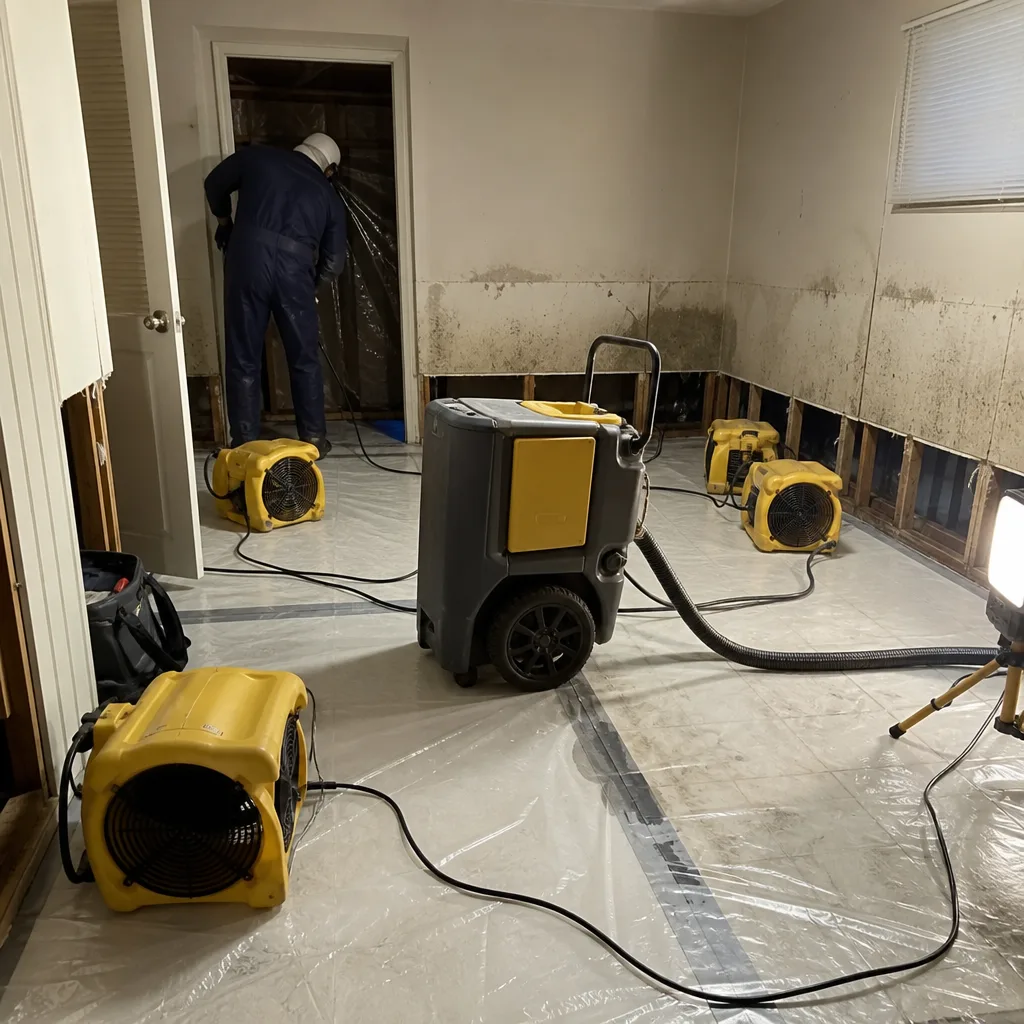
We’ve reviewed competitor files where the drying log showed three moisture readings over five days, yet the invoice billed for five days of equipment rental. That gap, by itself, triggers a supplement request or denial. Insurers don’t dispute that drying occurred; they dispute that the documented evidence supports the billed duration.
The documentation gap has three sources:
- Verbal scopes: The contractor walks through, points at damage, and says “we’ll handle it.” No written scope exists. When the final invoice exceeds the adjuster’s estimate by 40%, there’s no contract language to resolve the dispute.
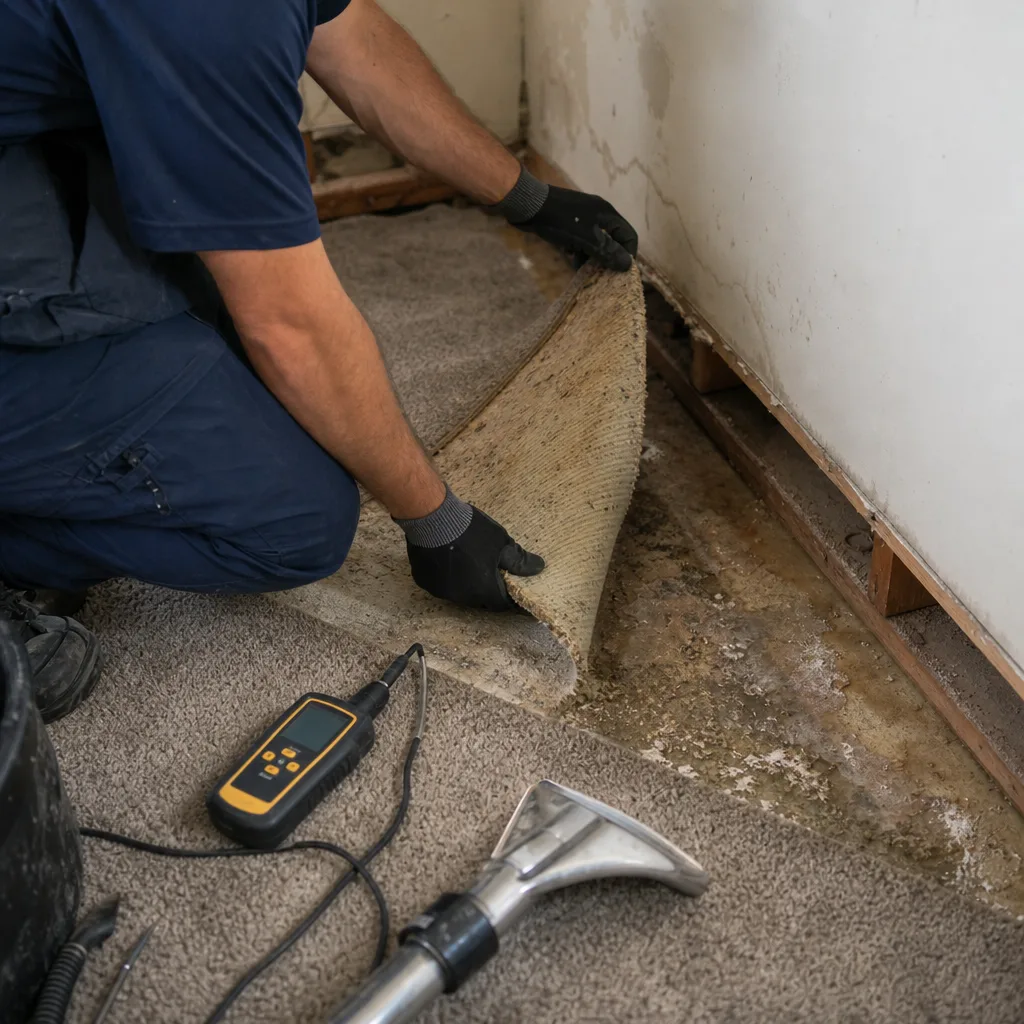
- Incomplete moisture logs: Daily readings are required for each affected room, each structural component (studs, subfloor, drywall), and each piece of equipment. A log that skips days, rooms, or materials creates a billing vulnerability.
- Missing photo sequences: Insurers audit by “before, during, after” photo sets tied to specific dates. Photos without timestamps, or photos that don’t show the full affected area, don’t count as evidence.
Spring Valley’s Clark County location means most claims route through regional insurer offices familiar with local construction costs. Those adjusters know that a 2,000-square-foot home in the Desert Inn Estates area has different restoration values than a comparable home in Henderson. What they don’t know, and won’t assume, is what your specific contractor actually did. The paper trail must show it.
At DryMark Restoration Spring Valley, every job starts with Haven Standard, Clause 1: a written price before any work begins. That written scope becomes the baseline against which all subsequent documentation is measured. If the drying log shows additional affected areas, the scope is amended in writing before billing changes. No verbal additions. No scope creep once the crew is inside.
Phase by Phase: What Happens and What Paper Must Exist
Phase 1: Emergency Response (Hours 0-4)
The first four hours determine whether a water loss becomes a mold claim. In Spring Valley, where summer temperatures exceed 110°F and evaporative cooling accelerates hidden moisture migration, speed matters for documentation as much as for drying.
What must exist after this phase:
- Emergency dispatch record with timestamp
- Initial moisture map showing affected rooms, materials, and square footage
- Category and classification of water (Clean/Category 1, Gray/Category 2, Black/Category 3)
- Emergency scope with written price (Haven Standard, Clause 1)
- Photo record: wide shots of each affected area, close-ups of damage sources, equipment placement
Phase 2: Mitigation and Stabilization (Days 1-3)
Mitigation stops active damage. For water losses, this means extraction and equipment deployment. For fire losses, board-up and debris removal. For mold, containment establishment.
What must exist after this phase:
- Daily moisture logs with readings for each affected material, taken with calibrated meters
- Psychrometric data: temperature, relative humidity, and vapor pressure differential readings
- Equipment inventory: dehumidifiers, air movers, injectidry systems by serial number
- Photo record showing daily progress, equipment positioning, and any changes in affected area
- Updated written scope if hidden damage is discovered
Phase 3: Drying and Decontamination (Days 2-5)
Drying continues until materials reach specific moisture content percentages. IICRC S500 sets these by material: wood framing at or below 16% moisture content, drywall at or below 12%, concrete subfloors referenced to established baseline for that specific slab.
What must exist after this phase:
- Final moisture readings showing attainment of drying goals
- Antimicrobial application log with product name, concentration, and application date
- Contents inventory with condition assessment (cleanable, unrestorable, requires specialized restoration)
- Photo record showing dry materials, clean surfaces, and ready-for-reconstruction status
Phase 4: Reconstruction and Completion (Days 5-30+)
Reconstruction is not emergency work. It’s scheduled, permitted where required, and scoped in writing like any remodeling project. The urgency language of mitigation does not apply here.
What must exist after this phase:
- Final written scope for reconstruction with line-item pricing
- Permit applications and inspection sign-offs for electrical, plumbing, or structural work
- Material invoices with product specifications matching pre-loss condition
- Final photo record showing completed work
- 365-Day Done Right Promise documentation under The Haven Standard
Spring Valley’s Desert Climate and Your Drying Timeline
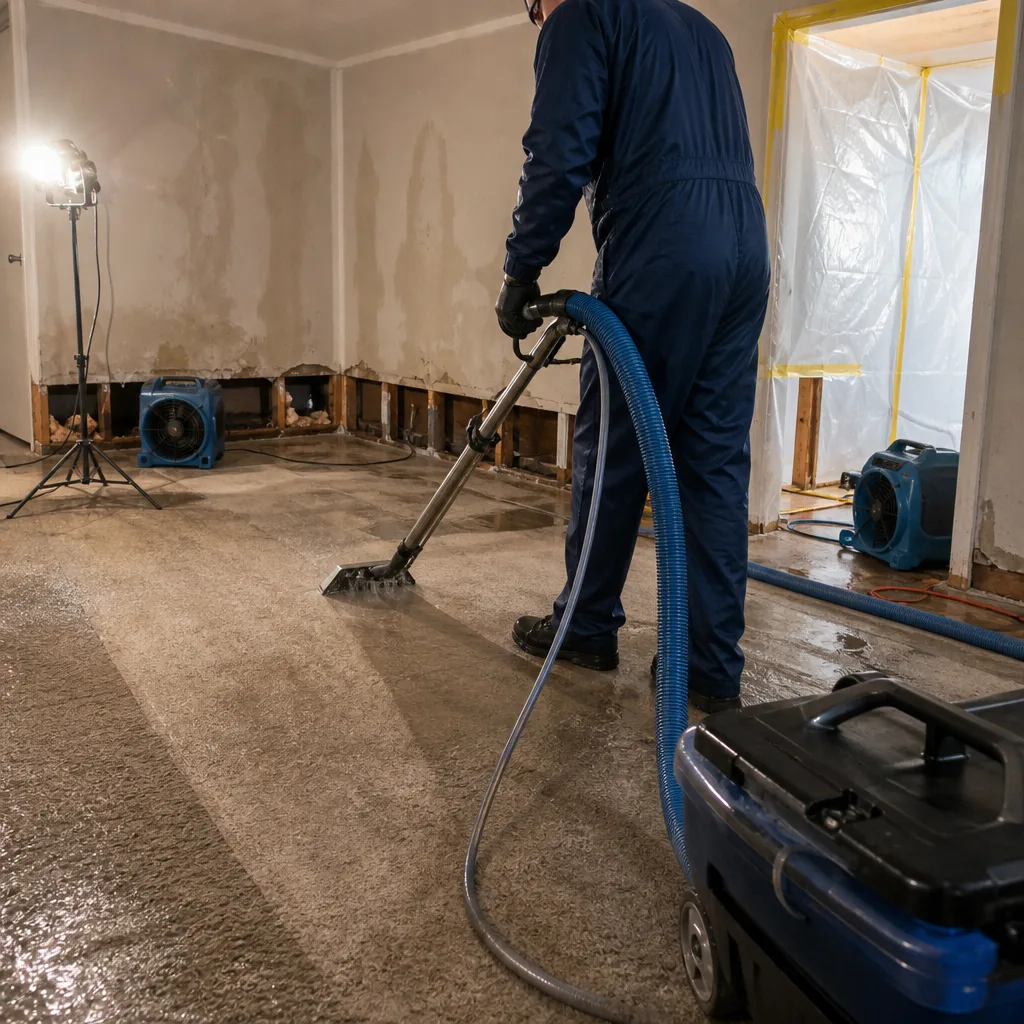
National IICRC drying charts assume average relative humidity of 50-60%. Spring Valley’s annual average hovers near 30%, with winter months dropping below 20%. This changes everything about equipment selection and timeline estimation.
Lower ambient humidity accelerates surface evaporation, which appears to speed drying. But it also increases vapor pressure differential, the force that drives moisture from wet materials into dry air. When that differential is too aggressive, surface materials dry while interior cavities remain wet. The wall feels dry to touch. The moisture meter shows 18% in the studs. Six weeks later, you have mold.
We’ve seen this in Spring Valley’s older homes near Decatur Boulevard, where lath-and-plaster construction creates multiple moisture reservoirs that standard drying protocols miss. The exterior reads dry. The interior cavity does not. Proper documentation requires probe readings at multiple depths, not just surface scans.
Desert climate also creates seasonal equipment needs. Summer’s extreme heat reduces dehumidifier efficiency; refrigerant units work harder for the same water removal. Winter’s low temperatures slow evaporation despite low humidity. A contractor using the same equipment configuration year-round in Spring Valley is guessing, not measuring.
Our daily drying logs document ambient conditions alongside material readings, so the data explains the timeline. If a drying goal takes an extra day because of a cold snap, the log shows why. Without that context, an insurer sees only an extended invoice.
What ‘Scope of Work’ Means in Nevada Contractor Law
In Nevada, a scope of work is a legally binding description of labor, materials, and completion standards that forms part of your contractor agreement. NRS 624 requires that residential construction contracts exceeding $1,000 include a description of the work to be performed and the materials to be used. Verbal descriptions, handshake agreements, or “we’ll take care of it” assurances do not satisfy this requirement.
The practical consequence: if your restoration contractor performs work not described in a written scope, you have limited recourse if the quality is disputed, the price exceeds expectations, or the insurer declines coverage. The scope is the contract. Everything else is conversation.
A defensible scope of work in Spring Valley restoration includes:
- Room-by-room description of affected areas with square footage
- Material classification by trade name (e.g., “5/8″ Type X gypsum wallboard,” not “drywall”)
- Specific drying goals by material type, referenced to IICRC S500 or equivalent standard
- Equipment type and quantity by manufacturer and model
- Antimicrobial product name and application method if applicable
- Timeline with milestones for moisture reading review
- Price by line item, with notation that amendments require written approval
- Signature blocks for contractor and property owner
Haven Standard, Clause 1 exists because we’ve seen what happens without this document. A homeowner in the Peccole Ranch area once received a $14,000 invoice for work described only as “dry out house” on a one-page estimate. The insurer paid $8,200. The homeowner owed the difference. A written scope would have established the full scope before work began, creating a basis for dispute resolution or supplemental claim.
How Insurers Audit Claim Files: The Sequence
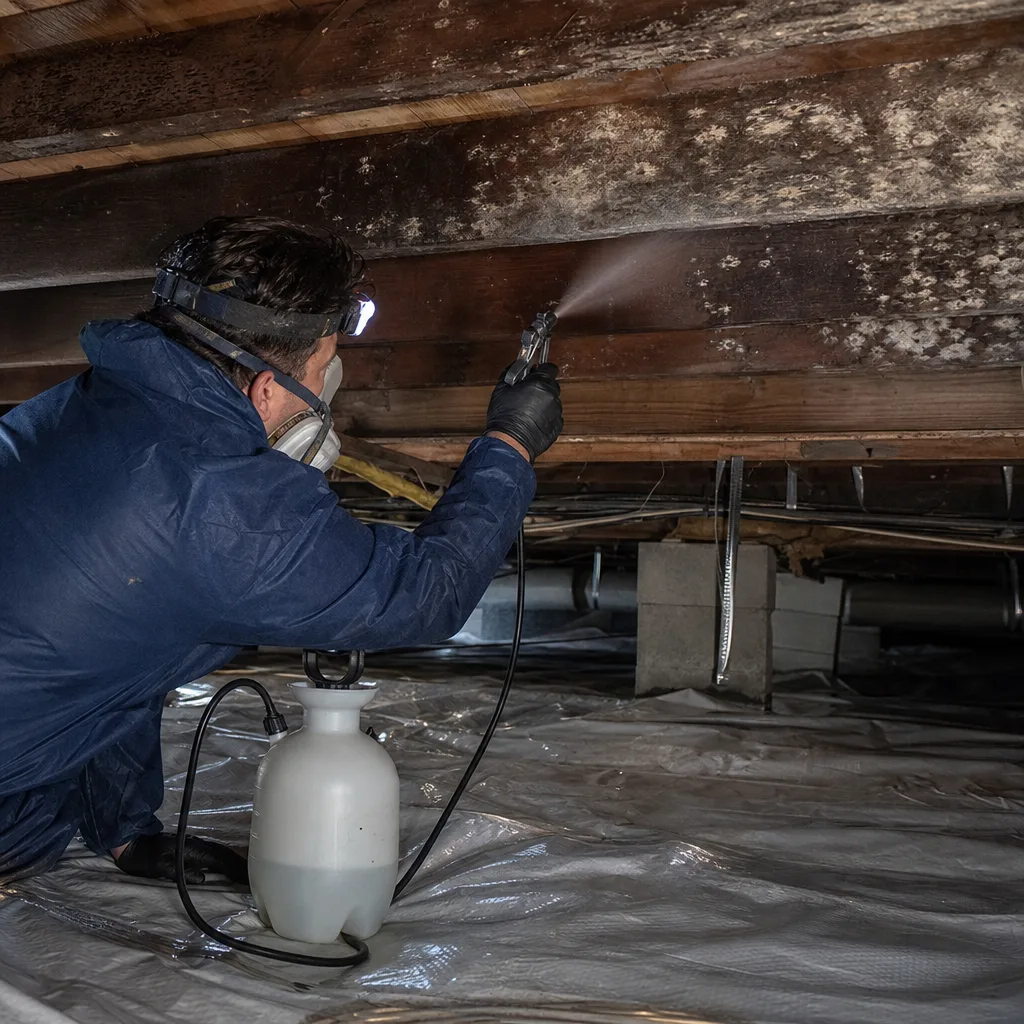
Insurer audits follow a predictable sequence. Understanding it helps you prepare documentation that survives scrutiny.
Step 1: Policy verification - Coverage limits, deductibles, and endorsements are confirmed. No restoration documentation matters if the loss type is excluded.
Step 2: Cause and origin determination - The adjuster verifies the loss was sudden and accidental, not gradual or maintenance-related. This is where incomplete documentation hurts most: a water loss with no moisture map showing the point of intrusion may be classified as long-term leakage, triggering a denial.
Step 3: Scope comparison - The adjuster compares the contractor’s scope against their own estimate, line by line. Missing items in either direction create disputes. A scope that’s more detailed than the adjuster’s estimate often prevails; a vague scope always loses.
Step 4: Documentation review - Moisture logs, photos, and equipment inventories are checked for internal consistency. The key metric: do the daily readings support the billed duration? A log showing attainment of drying goals on day 3 cannot support equipment billing through day 5.
Step 5: Pricing validation - Unit costs are compared against regional databases (Xactimate, Verisk). Spring Valley pricing typically indexes near Las Vegas metro rates, but specific neighborhoods may vary based on construction type and access difficulty.
Step 6: Payment authorization or supplement request - Complete documentation produces payment. Gaps produce requests for additional information, reduced payment, or denial.
The audit sequence explains why our photo record on every visit is standard, not optional. Photos timestamped to the drying log create a narrative that survives Step 4. Without them, the contractor’s word competes against the adjuster’s skepticism.
Equipment Standards That Separate Defensible Work from Guessed Work
Equipment specification matters for documentation as much as for performance. An insurer can verify whether a stated dehumidifier capacity matches the manufacturer’s published specifications. A log that claims 150-pint removal using a 70-pint residential unit fails that verification.
Professional-grade drying systems we deploy include:
- Dri-Eaz and Phoenix refrigerant dehumidifiers: Low-grain refrigerant (LGR) units that maintain efficiency below 40 grains per pound, essential for Spring Valley’s low-humidity conditions where standard units lose capacity.
- XPOWER and B-Air air movers: Centrifugal and axial units specified by airflow rate (CFM) and positioning protocol, documented in the drying plan for each job.
- Injectidry systems: Positive and negative air pressure drying for wall cavities, hardwood floors, and other confined spaces where surface drying is insufficient. The Injectidry HP60 and Floor Drying System are specified by cavity type and documented with pre- and post-readings.
Equipment documentation in our daily logs includes manufacturer, model, serial number, placement location, and runtime hours. This specificity serves two purposes: it proves the capacity claimed on the invoice, and it demonstrates that equipment selection matched the specific drying challenge rather than defaulting to a standard kit.
Psychrometric data, the measurement of air properties that govern drying, is recorded at each visit. Vapor pressure differential, the difference between the vapor pressure in the affected material and the surrounding air, determines whether moisture is actually leaving the material or merely redistributing. We define this in plain terms on every log: “VPD of 12.3 mmHg indicates active moisture movement from stud to air; target is sustained VPD above 10 mmHg until moisture content reaches 16%.”
All work is documented to IICRC, RIA, and IFA standards. These aren’t marketing affiliations. They’re the reference frameworks that insurers use to evaluate whether restoration practices meet industry-accepted thresholds.
Common Mistakes to Avoid
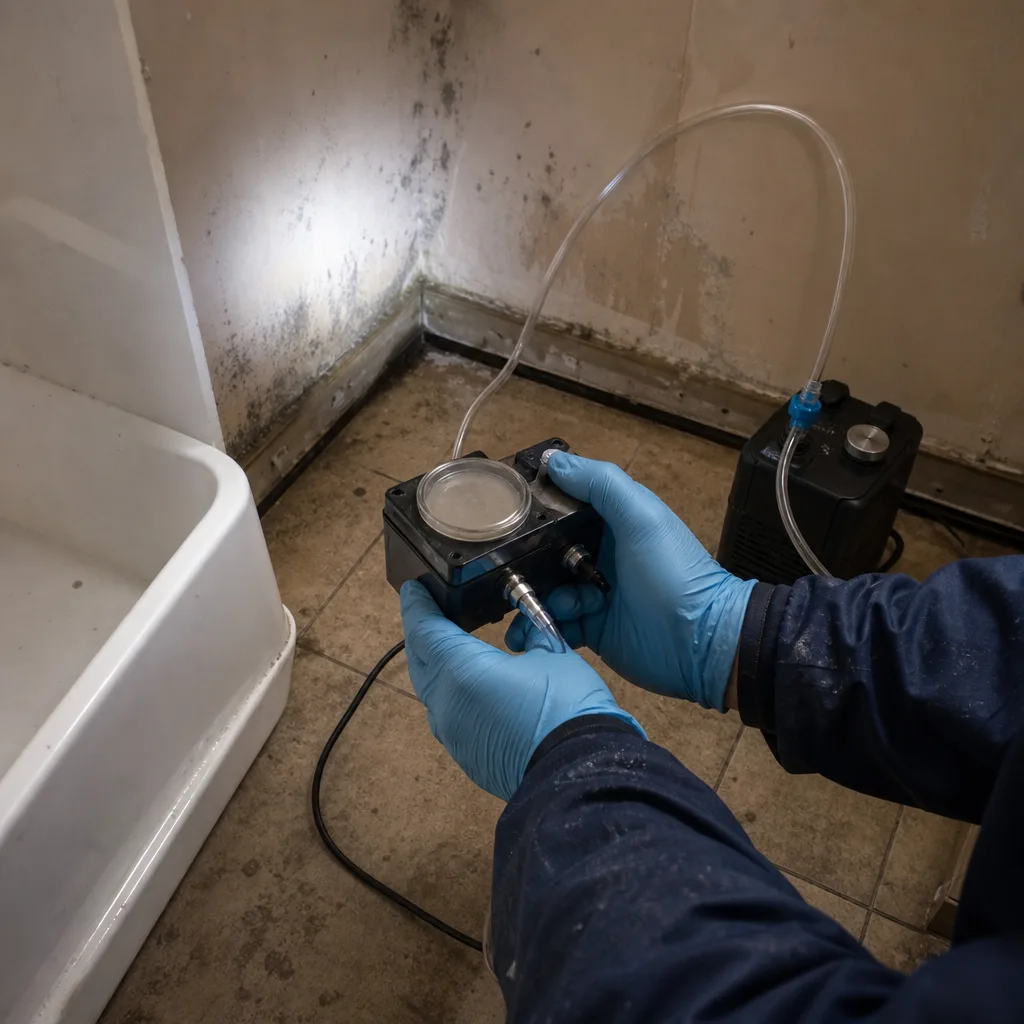
- Signing a blank or vague work authorization. “Authorization to perform necessary services” gives the contractor unlimited scope. Insist on a written price and specific description before any work begins.
- Accepting verbal updates without written amendment. Hidden damage is common in Spring Valley’s slab-on-grade construction. Every discovered issue requires a written scope amendment, not a phone call confirmation.
- Ignoring humidity baselines in equipment selection. A contractor using the same dehumidifier in July and January in Spring Valley doesn’t understand local conditions or isn’t documenting the difference.
- Letting the mitigation contractor also handle reconstruction without competitive scope. The same company can do both, but the reconstruction scope should stand alone for review, not inherit assumptions from the emergency phase.
- Failing to photograph personal property before it’s moved or discarded. Contents inventory disputes are the second most common source of claim supplementation. Photo documentation before any handling protects both the homeowner and the restoration company.
- Assuming insurance covers everything without verifying coverage limits and exclusions. Spring Valley’s hard water and aging infrastructure in older neighborhoods create gradual damage that standard policies exclude. The cause documentation must show sudden, accidental loss.
- Not requesting a second opinion on a competitor’s estimate. Our Free Second Opinion on any written estimate exists because we’ve found scope gaps, overbilling, and unnecessary demolition in competitor proposals. An independent review costs nothing and often saves thousands.
When to Call a Professional
Call for professional assessment when water affects more than a single, small area you can dry with household fans; when mold is visible or suspected based on musty odor; when fire or smoke damage extends beyond a contained cooking incident; when sewage or category 3 water is involved; or when structural damage from storm or vehicle impact compromises safety.
Do not attempt DIY remediation of high-tension garage door systems, electrical panels, or gas lines affected by damage. These require licensed trade professionals and are documented separately from restoration work.
Water Damage Restoration in Spring Valley and Mold Remediation in Spring Valley are available through DryMark Restoration Spring Valley, with live phone coverage 24 hours a day, 7 days a week and no voicemail on emergency lines. We offer free estimates in Spring Valley - call (702) 430-2725.
Frequently Asked Questions
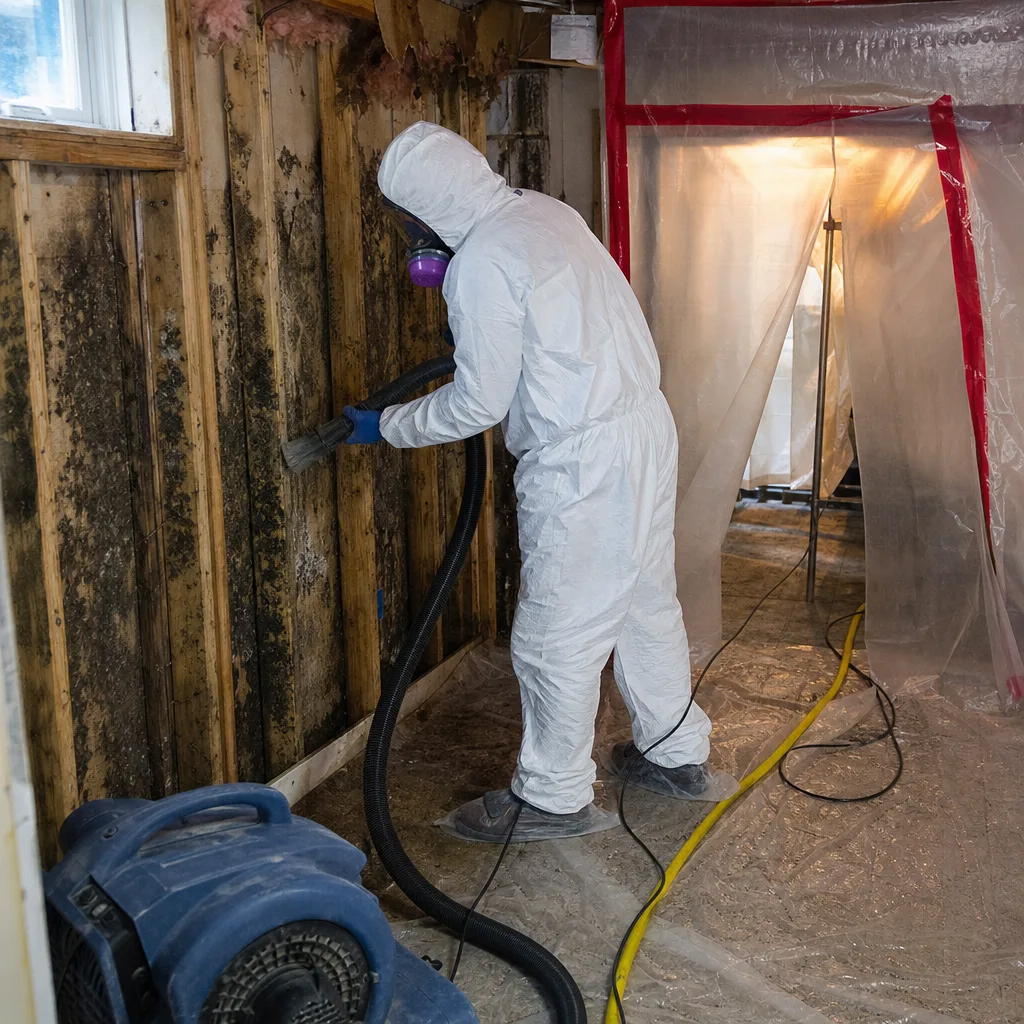
Water damage mitigation in Spring Valley typically ranges from $1,200 for a contained, single-room extraction and dry-out to $8,500+ for whole-house flooding with category 2 or 3 water requiring extensive demolition and antimicrobial treatment. Mold remediation runs $800-$3,500 for contained attic or bathroom projects, and $5,000-$15,000+ for whole-house infestation with HVAC contamination. Fire and smoke restoration starts around $3,000 for localized kitchen or room damage and exceeds $25,000 for structural involvement. Reconstruction is priced separately by line item after mitigation completion. Call (702) 430-2725 for an exact quote - estimates are free, and Haven Standard, Clause 1 requires a written price before any work begins.
Insurance covers sudden, accidental losses subject to your policy limits, deductible, and specific endorsements. Coverage is reduced or denied for gradual damage, maintenance issues, or losses below the deductible. The single largest factor in full payment is documentation: a complete moisture log, photo record, and written scope that proves the loss was sudden and the work was necessary. We coordinate directly with adjusters and provide the documentation package that supports claim approval. Call (702) 430-2725 to discuss your specific situation.
Our live dispatch answers every call 24 hours a day, 7 days a week with no voicemail. Emergency response for active water intrusion, fire damage, or biohazard situations typically arrives within 60-90 minutes in the Spring Valley area. Reconstruction and non-emergency assessments are scheduled by appointment, usually within 24-48 hours. Speed language applies to mitigation only; reconstruction is scoped, scheduled, and priced in writing before work begins.
Visible mold growth exceeding 10 square feet, mold in HVAC systems, or mold resulting from category 2 or 3 water requires professional remediation under IICRC S520. DIY cleaning of surface mold on non-porous materials is possible for very small, contained areas, but improper handling spreads spores and creates liability issues if the area is later found to be inadequately addressed. We offer a free second opinion on any competitor’s mold assessment if you’re uncertain about the scope recommended.
We coordinate directly with your adjuster, providing the documentation package, photo record, and written scope that supports claim processing. Our daily drying logs and equipment inventories are formatted for direct submission. You remain the policyholder and must authorize all work, but the administrative burden of documentation and negotiation rests with us. This direct coordination is standard on every job, not an additional service.
Mitigation is emergency work to stop active damage and stabilize the property: water extraction, drying, debris removal, board-up. It’s urgent, equipment-intensive, and billed by time and materials with daily documentation. Reconstruction is the return of removed materials and finishes to pre-loss condition: drywall, flooring, cabinetry, paint. It’s scheduled work, permitted where required, and scoped in writing with line-item pricing before commencement. Never let a contractor blur these phases into a single, vague estimate.
Spring Valley’s low humidity (annual average near 30%, winter lows below 20%) accelerates surface evaporation but can mask interior moisture in wall cavities and subfloors. Proper drying requires probe readings at depth, not surface scans, and equipment selection adjusted for seasonal conditions. Summer’s extreme heat reduces dehumidifier efficiency; winter’s low temperatures slow evaporation. A contractor using identical equipment year-round without documenting ambient conditions is not following IICRC protocol.
The Bottom Line
Damage restoration in Spring Valley succeeds or fails on documentation, not dramatic rescues. The homeowner who receives a written scope before work begins, daily moisture logs during drying, and a photo record on every visit has the paper trail that turns a restoration invoice into a paid claim. The homeowner who accepts verbal assurances and handshake agreements inherits the documentation gap that insurers exploit.
We’ve restored over 12,000 homes since 2011, every one with a written price before work started and a documented record when the crew left. The Haven Standard exists because Alicia Brennan founded this company after seeing, as a claims adjuster, what sloppy documentation costs homeowners at claim time. That origin is the problem we solve daily.
For water damage, mold, fire, or storm restoration in Spring Valley, call (702) 430-2725. Estimates are free. The written price arrives before any work begins. The documentation package follows you through every phase of your claim.
Written by Alicia Brennan, Owner at DryMark Restoration Spring Valley, serving Spring Valley since 2011.