
Last updated September 23, 2026
Free visual inspection and a written scope of work before any mitigation begins - photos, moisture readings, and drying logs go in your claim file
The scope we write is the scope we bill. Anything new gets shown to you, in writing, before we touch it.


Damage Restoration Permits, Codes & Inspections in NV: What You Need to Know
Clark County requires a building permit for drywall replacement that affects structural members - a threshold crossed in nearly every Category 3 water loss - but fewer than a third of residential restoration jobs in the valley pull one. Most homeowners in Spring Valley and across the Las Vegas valley never learn this until a home sale falls through or an insurer denies a secondary claim. This guide draws the permit line precisely: which restoration tasks trigger Clark County inspection, which require specialty licensing under Nevada Revised Statutes, and how unpermitted work can void title insurance or block policy renewal. For damage restoration warning signs every Spring Valley homeowner should know, see our companion guide. If you’re managing water, fire, or mold damage in Spring Valley, the permit question isn’t bureaucratic paperwork. It’s financial protection.
Quick Answer
Most structural repairs from water, fire, or mold damage in Nevada require a Clark County building permit if they alter load-bearing elements, exceed 200 square feet of affected drywall, or involve electrical, plumbing, or HVAC systems. Mold remediation and asbestos abatement require additional specialty contractor licensing under NRS Chapter 624. Unpermitted restoration work discovered during a future home sale or insurance claim can void coverage, trigger lender liability, and force costly re-inspection.
Table of Contents
- Clark County Permit Thresholds for Restoration Work
- Contractor License vs. Specialty License Under NRS Chapter 624
- The Inspection Sequence for Concealed Cavity Work
- When ‘Like for Like’ Conflicts: Building Code vs. Insurance Policy
- How Open Permits Affect Title Insurance and Policy Renewal
- Spring Valley-Specific Considerations: Climate, Soil, and Code
- Documentation Standards That Satisfy Both Inspectors and Adjusters
- Common Mistakes to Avoid
- When to Call a Professional
- Frequently Asked Questions
- The Bottom Line
Clark County Permit Thresholds for Restoration Work
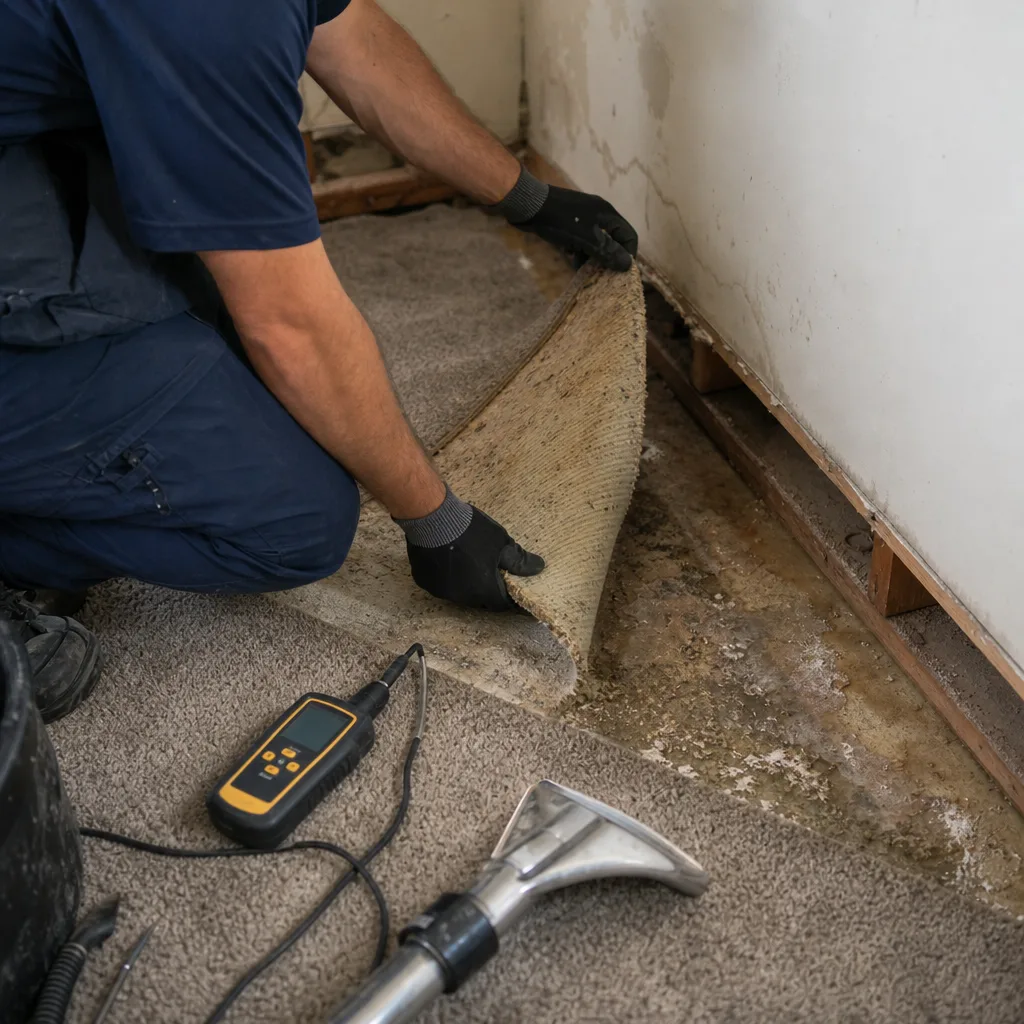
Clark County Building Department operates under the Southern Nevada Amendments to the International Building Code, and their permit triggers are specific enough that a restoration crew can cross them without realizing. Understanding these thresholds before work starts prevents the scenario we see regularly: a homeowner in Spring Valley finishes a water damage restoration, lists the property two years later, and discovers an open permit flag that stalls closing.
The county requires a building permit for any of the following restoration scenarios:
- Structural member alteration: Removal or replacement of any load-bearing wall, beam, column, or floor joist. In a typical Spring Valley single-family home built 1995-2010, this includes most wet-bottom wall framing after a Category 3 water loss.
- Drywall replacement exceeding 200 square feet in a single room: This threshold is lower than many contractors assume. A 12×14 bedroom with flood damage to the lower 4 feet of all four walls hits 208 square feet.
- Electrical system repair or replacement: Any work beyond device replacement - rewiring circuits damaged by water or fire, replacing panels, or relocating outlets.
- Plumbing system modification: Pipe replacement beyond direct fixture repair, including repiping after freeze damage or sewage backup.
- HVAC ductwork replacement or relocation: Common after fire smoke infiltration or mold contamination in attic systems.
- Roof structural repair: Any decking or truss work after storm damage, not merely shingle replacement.
Permit-exempt work is narrower than most homeowners expect. Painting, flooring replacement, and cabinet removal don’t require permits. But the moment a crew opens a wall and finds compromised studs - which happens in roughly 60% of the water losses we document in Spring Valley’s older subdivisions - the permit threshold is crossed.
The county also distinguishes between repair and alteration. Repair returns a system to its pre-damage condition using equivalent materials. Alteration changes the system’s configuration, capacity, or code compliance status. A straight drywall replacement is repair. Replacing 3/8-inch drywall with 5/8-inch fire-rated drywall in a garage-to-living-space conversion discovered during fire restoration is alteration, and it triggers full plan review.
Permit fees scale with project valuation. For a typical residential water damage restoration involving 300-500 square feet of drywall, framing repair, and electrical outlet relocation, expect a permit fee of $180-$340 plus plan review charges. The county offers same-day permit issuance for minor repairs if plans are complete; larger projects require 5-10 business days for review.
Contractor License vs. Specialty License Under NRS Chapter 624
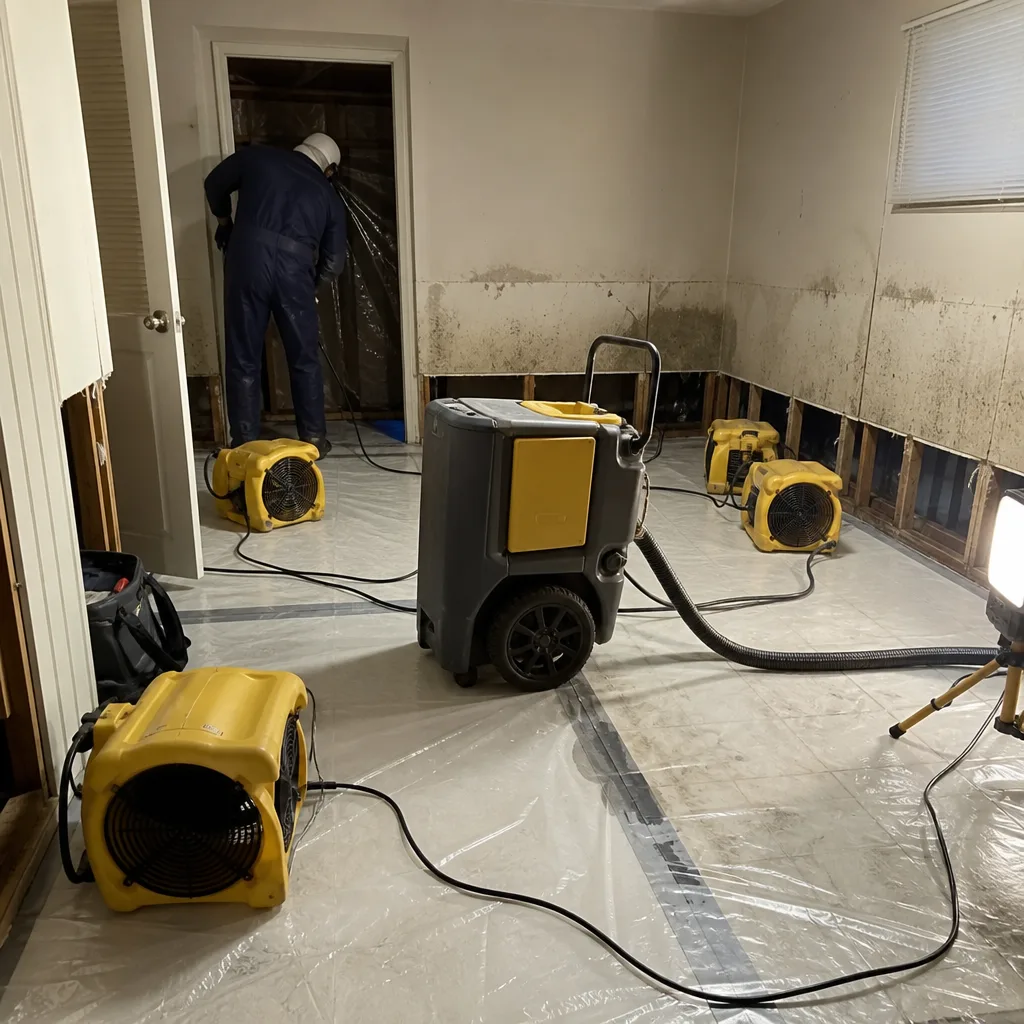
Nevada Revised Statutes Chapter 624 governs who can perform restoration work, and the license categories matter for both permit eligibility and insurance claim documentation. A general contractor holding a C-10 (Residential and Small Commercial) or B (General Building) license can perform most structural repairs and pull permits for them. But several restoration disciplines require additional specialty licensing that a general contractor cannot delegate to an unlicensed employee.
The critical specialty licenses for restoration work:
| License Classification | Scope | Restoration Application |
|---|---|---|
| C-10 (Residential & Small Commercial) | Structures up to 3 stories, 10,000 sq ft | Standard water/fire damage framing, drywall, flooring |
| B (General Building) | All structures, no height limit | Large-loss commercial, high-rise, complex reconstruction |
| C-14 (Steel Reinforcing & Structural Welding) | Structural steel repair | Fire-damaged steel framing, beam replacement |
| C-21 (Refrigeration & Air Conditioning) | HVAC systems | Duct replacement, condensate line repair, whole-system restoration |
| C-37 (Plumbing) | Water and sewage systems | Repiping, sewer line replacement, backflow restoration |
| C-2 (Electrical) | Electrical systems | Panel replacement, circuit rewiring, emergency generator tie-in |
| Asbestos Abatement Supervisor | Asbestos-containing material removal | Pre-1990 buildings with fire or water damage to ACM |
Mold remediation occupies a regulatory gray zone that surprises many property owners. Nevada does not issue a standalone “mold remediation” contractor license. Instead, mold work falls under the C-10 or B license if it involves structural repair, or under an asbestos abatement license if mold is discovered in conjunction with asbestos-containing materials. However, the Nevada Division of Public and Behavioral Health requires notification for mold remediation projects exceeding 100 square feet of contiguous growth, and projects exceeding 1,000 square feet require a certified industrial hygienist to develop a remediation plan.
We’ve reviewed competitor estimates in Spring Valley where a C-10 contractor proposed extensive mold remediation without industrial hygienist involvement on a 2,400 square foot attic contamination. That’s not merely non-compliant; it creates documentation that an insurer can reject and that exposes the homeowner to future liability if hidden growth recurs. Mold remediation in Spring Valley requires understanding both the licensing floor and the documentation ceiling.
The practical implication: when you receive a restoration estimate, verify that the license classification on the proposal matches the work described. A C-10 contractor proposing HVAC duct replacement needs a C-21 subcontractor or dual licensure. The permit application will list responsible parties, and mismatches there can delay inspection sign-off.
The Inspection Sequence for Concealed Cavity Work
Clark County’s inspection protocol for concealed cavities - wall interiors, ceiling plenums, soffits - creates a documentation requirement that many restoration crews mishandle. The sequence matters because an inspector who finds closed drywall over uninspected framing will require re-opening, and that re-opening is not typically covered by insurance as “supplemental” damage.
The standard inspection sequence for a water-damaged wall cavity in Spring Valley:
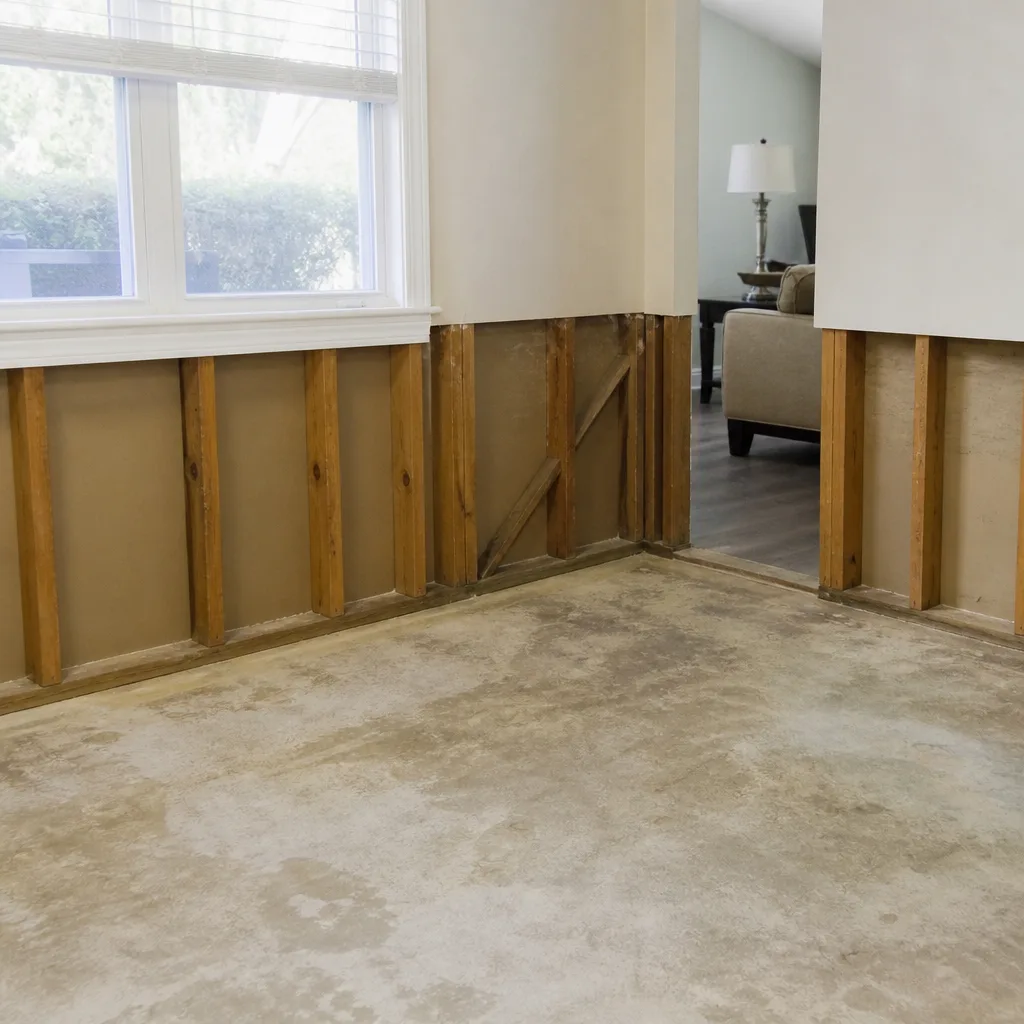
- Framing inspection: After water-damaged drywall and insulation are removed, the exposed framing must be inspected for structural integrity, mold growth, and moisture content. The county requires wood moisture readings below 16% for dimensional lumber and below 12% for engineered wood products. We document these with pin-type meters calibrated to species - Douglas fir studs common in 1990s Spring Valley construction read differently than the SPF (spruce-pine-fir) used in 2000s builds.
- Electrical rough-in inspection (if applicable): Any rewiring must be inspected before insulation is replaced. This is the inspection most commonly skipped in restoration work, often because a contractor assumes existing wiring can be re-energized without examination.
- Plumbing rough-in inspection (if applicable): Repiped lines, new shutoff valves, or drain modifications require sign-off before concealment.
- Insulation inspection: The county verifies insulation type and installation quality. This is where “like for like” disputes commonly arise - more on that in the next section.
- Final inspection: Completed wall assembly, including drywall finish, is inspected for code compliance. The inspector verifies that all prior inspections were signed off and that the finished work matches the approved plans.
The critical chokepoint is between steps 1 and 2. A restoration crew under pressure to dry in and move to the next job will sometimes install new insulation over framing that hasn’t passed inspection, gambling that the inspector won’t require re-opening. In our experience across Spring Valley and the broader valley, that gamble fails about 40% of the time, and the cost of re-opening, re-inspecting, and re-closing falls on the contractor or homeowner - not the insurer.
Our protocol under The Haven Standard requires photo documentation of each inspection stage: framing moisture readings with meter model and calibration date visible, inspector sign-off sheets, and insulation batch numbers for material traceability. These photos become part of the claim file that we deliver to the adjuster, and they’ve prevented countless disputes over whether work was completed to code.
When ‘Like for Like’ Conflicts: Building Code vs. Insurance Policy
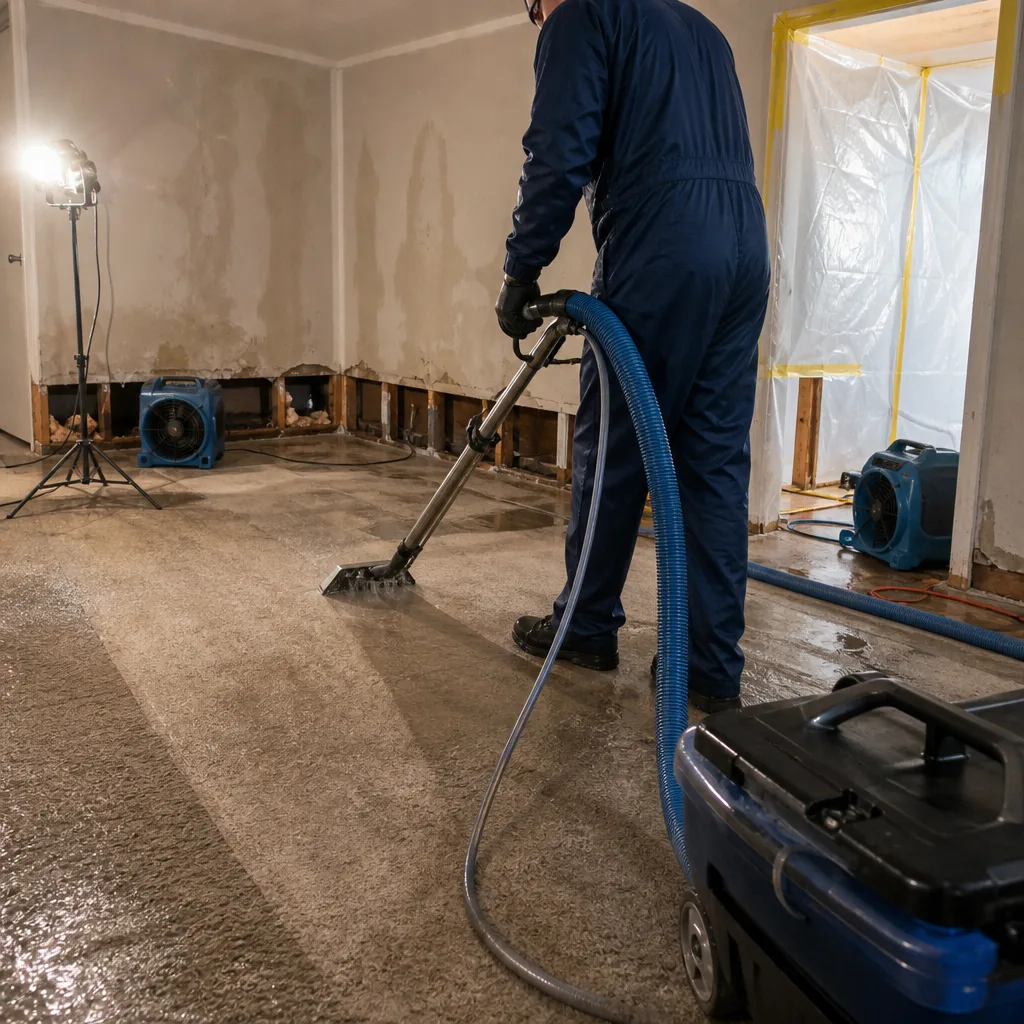
“Like for like” sounds simple until it doesn’t. Insurance policy language typically promises to repair or replace damaged property with “material of like kind and quality.” Nevada building code requires replacement with materials that meet current code, regardless of what was there before. When those two standards diverge, someone pays the difference - and that someone is often the homeowner who didn’t know the gap existed.
Common conflicts we document in Spring Valley restorations:
- Insulation R-value upgrades: A 1998 Spring Valley home originally had R-11 fiberglass batts in exterior walls. Current Clark County energy code requires R-21 in new construction and R-13 minimum for repairs exceeding 50% of a wall assembly. The insurer’s “like for like” offer covers R-11. The code-compliant repair requires R-13. The $800-$1,200 difference per 1,000 square feet falls to the property owner unless documented as a code upgrade in the claim.
- Drywall thickness and type: Original 1/2-inch regular drywall in a garage adjacent to living space must now be 5/8-inch Type X fire-rated under current amendments. This is an alteration, not repair, triggering permit requirements and cost differentials.
- Low-VOC materials: Some insurers classify low-VOC paint and sealants as “upgrades” rather than code compliance, though Clark County and Nevada state regulations increasingly require them in occupied structures during restoration.
- Structural connector upgrades: Pre-2000 framing often used simple toenails for joist-to-beam connections. Current seismic and wind-load requirements in the Southern Nevada Amendments mandate metal connectors. A structural repair that exposes these connections triggers the upgrade requirement.
The resolution path is documentation-first. We photograph the original material, cite the applicable code section, and prepare a written scope that separates “like for like” replacement from mandatory code upgrade. This scope goes to the adjuster before work begins - Haven Standard, Clause 1 - so the upgrade cost is negotiated while the wall is open, not disputed after it’s closed.
We’ve seen homeowners in Spring Valley’s Paradise Hills and Spring Valley Ranch subdivisions absorb $3,000-$7,000 in unplanned code upgrade costs because their restoration contractor replaced materials without documenting the code requirement first. The insurer paid for R-11 insulation; the county required R-13; the homeowner paid the difference without knowing it was claimable.
How Open Permits Affect Title Insurance and Policy Renewal
An open permit is a permit that was pulled but never received final inspection sign-off. In Clark County’s system, these remain attached to the property’s parcel number indefinitely. They surface during title searches, and they create problems in two specific scenarios that restoration customers rarely anticipate.
Home sale complications: Title insurance underwriters flag open permits as potential encumbrances. A buyer’s lender may require permit closure before funding, or may escrow funds for estimated completion costs. In Spring Valley’s active resale market, we’ve seen closing delays of 2-6 weeks while a homeowner tracks down a contractor who completed restoration work three years prior and never called for final inspection. The cost of permit closure - often requiring re-opening walls to prove code compliance - escalates with time as materials degrade and documentation disappears.
Insurance policy renewal: Some Nevada insurers now cross-reference county permit databases during renewal underwriting. An open permit for fire damage restoration, even if the work was completed satisfactorily, can trigger a coverage review. The insurer’s concern is not the work quality but the liability exposure: if unpermitted work causes future damage, the insurer may face subrogation claims with unclear responsibility.
The prevention is systematic: every permit pulled gets a final inspection scheduled, every inspection gets documented, and documentation gets delivered to the homeowner in the project closeout packet. Under The Haven Standard, we include permit status verification as a standard deliverable. If we didn’t pull the permit - because the job was below threshold or because a previous contractor handled it - we verify status through Clark County’s online portal and report findings in writing.
For properties in Spring Valley’s older tracts, particularly those built 1985-1995 with multiple prior owners, we recommend a permit history search as part of any major restoration project. Previous unpermitted additions, common in that era, can complicate even straightforward current repairs by establishing a pattern of non-compliance that inspectors scrutinize more closely.
Spring Valley-Specific Considerations: Climate, Soil, and Code
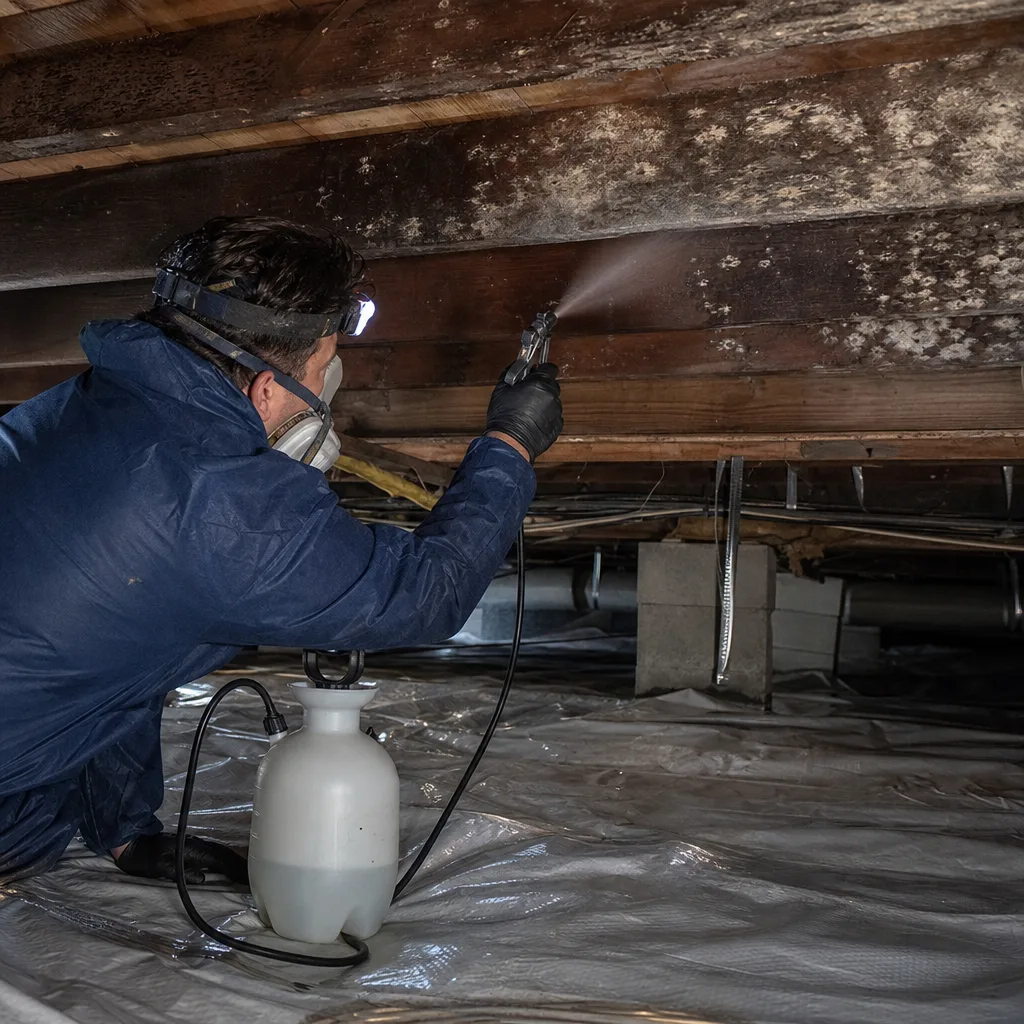
Spring Valley’s location in the Las Vegas valley creates restoration conditions that differ materially from Reno, Henderson, or even adjacent Las Vegas proper. These factors affect both permit requirements and inspection outcomes.
Caliche soil and foundation movement: Spring Valley’s soil profile includes extensive caliche layers - cemented calcium carbonate deposits that create irregular moisture migration patterns. After a significant water loss, moisture can travel laterally along caliche lenses rather than draining vertically, affecting more wall cavities than surface readings suggest. County inspectors are familiar with this pattern and will scrutinize moisture documentation more closely in Spring Valley than in areas with more uniform sandy soils.
Monsoon-driven secondary damage: July and August monsoon storms in Spring Valley produce rapid humidity spikes that can reactivate dormant mold in improperly dried cavities. Inspectors who sign off on restoration work in May may see recurrence complaints in August if drying protocols didn’t account for seasonal humidity variation. Our drying logs include vapor pressure differential readings - the difference between ambient vapor pressure and the vapor pressure at the material surface - to prove that materials were dried to a margin that absorbs seasonal fluctuation.
Age-stratified construction quality: Spring Valley’s development waves - 1970s-1980s east of Decatur, 1990s-2000s west of Rainbow - produced different framing standards, insulation practices, and electrical configurations. Permits and inspections must reference the correct code cycle. A 1985 build falls under the 1982 UBC with 1985 amendments; a 2005 build falls under the 2003 IBC with Southern Nevada Amendments. Using the wrong code cycle in permit application can delay approval by weeks.
HOA architectural review requirements: Many Spring Valley neighborhoods, particularly gated communities west of Rainbow Boulevard, require HOA architectural committee approval for exterior repairs that change appearance. This is separate from county permitting but equally capable of stalling work. We coordinate both tracks simultaneously to prevent the common scenario where county permit is approved but HOA denial forces redesign.
Documentation Standards That Satisfy Both Inspectors and Adjusters
The overlap between county inspection requirements and insurance claim documentation is narrower than most homeowners assume. An inspector wants to verify code compliance at specific points. An adjuster wants to verify that damaged property was restored to pre-loss condition. The documentation that serves both audiences simultaneously is what we build under The Haven Standard.
Our daily deliverables on every permitted restoration project include:
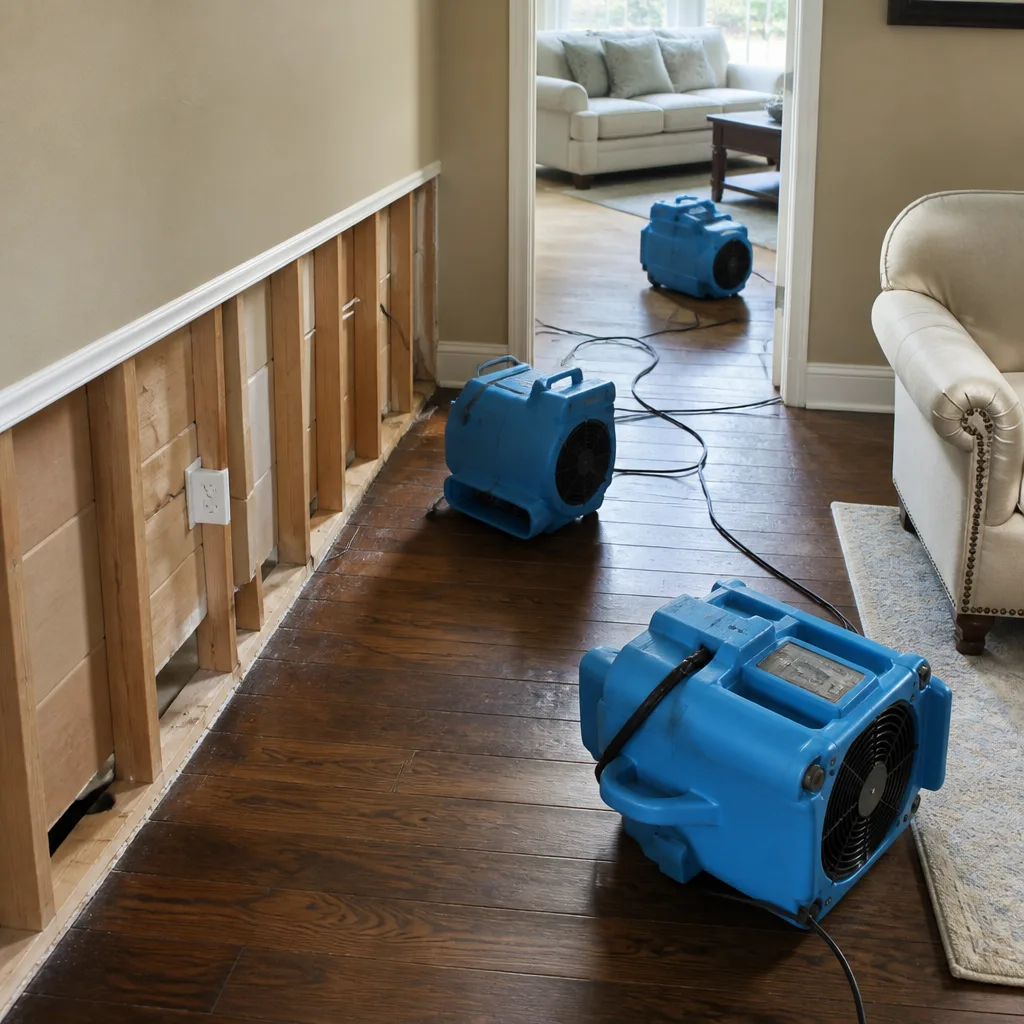
- Moisture mapping with psychrometric data: Temperature, relative humidity, and specific humidity readings for each affected room, plotted against drying goals calculated per IICRC S500 standards. Psychrometrics is the study of air-vapor mixtures; we use it to prove that our drying equipment - Injectidry cavity drying systems, B-Air axial air movers - is configured correctly for the conditions.
- Photo record with metadata: Every image includes date, time, GPS coordinates, and technician name. We shoot structural conditions before any alteration, material deliveries with batch numbers, each inspection stage, and final condition. This sequence satisfies both county inspection review and adjuster documentation requirements.
- Written scope with line-item pricing: Haven Standard, Clause 1 requires a written price before work begins. We extend this to include permit fees, inspection fees, and code upgrade contingencies as separate line items so the homeowner and adjuster can see where each dollar goes.
- Inspector contact log: Dates and outcomes of every inspector interaction, including re-inspection requirements and resolution. This prevents the “he said, she said” disputes that arise when inspection records are incomplete.
- Material certifications: Fire-rated drywall, low-VOC sealants, and treated lumber all carry certification markings that inspectors may request. We photograph these before installation and include copies in the closeout packet.
The IICRC and RIA standards we follow provide the technical framework; The Haven Standard provides the documentation discipline. Together, they produce claim files that we’ve never seen denied for documentation insufficiency - a statement we can make because Alicia Brennan built this company after years as a claims adjuster watching homeowners lose legitimate claims to sloppy paperwork.
Common Mistakes to Avoid
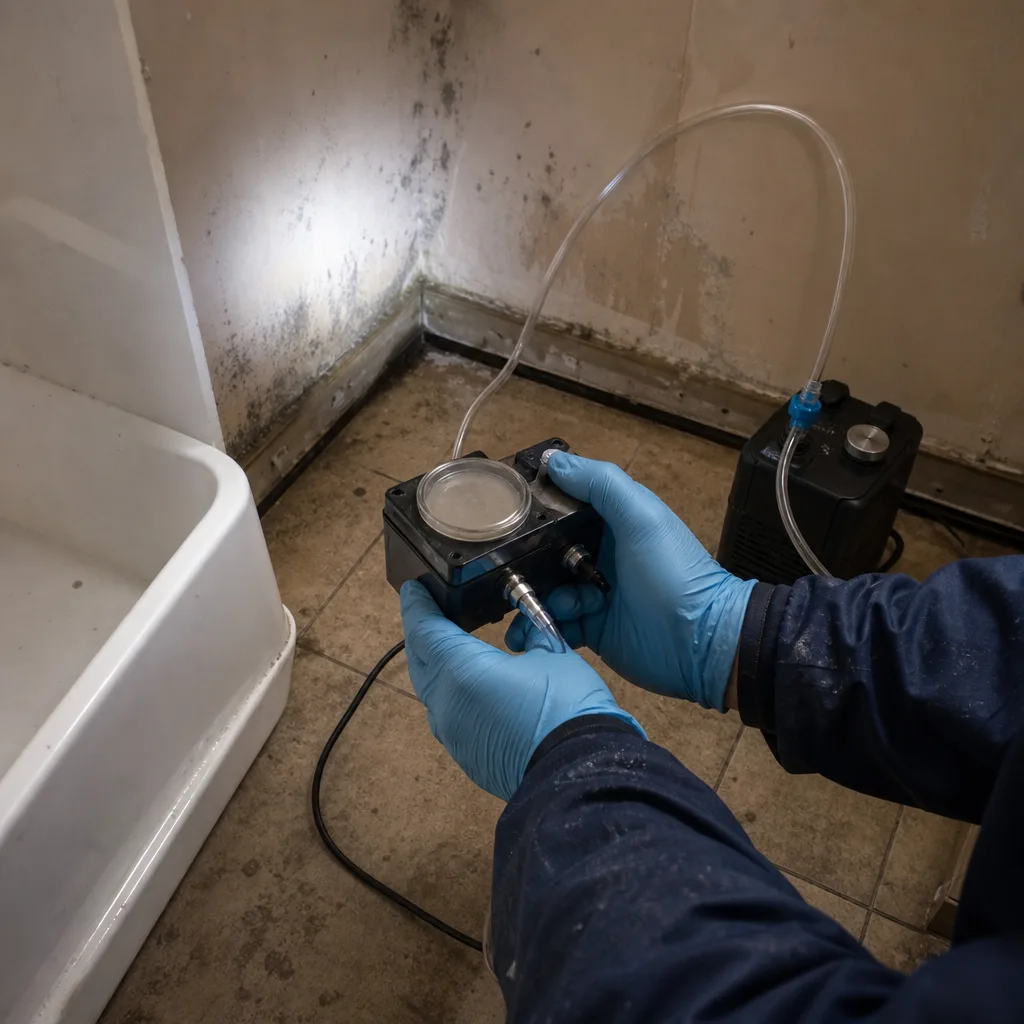
- Assuming the restoration company handles all permits: Many restoration contractors, particularly national franchise operations, leave permit responsibility to the homeowner or a separate general contractor. Verify in writing who pulls permits and who schedules inspections before work begins.
- Closing walls before insulation inspection: In Spring Valley’s climate, inspectors frequently find insulation gaps or vapor barrier misinstallation in concealed cavities. Closing the wall before sign-off risks mandatory re-opening at your expense.
- Accepting “like for like” without code verification: The insurer’s estimate may specify materials that don’t meet current Clark County code. A written scope that separates replacement from upgrade, prepared before work starts, prevents surprise out-of-pocket costs.
- Neglecting final inspection scheduling: A permit pulled but never closed becomes an open permit that haunts the property record. Confirm final inspection is scheduled, completed, and recorded before final payment to the contractor.
- Ignoring HOA requirements in Spring Valley gated communities: County permit approval does not override HOA architectural control. Coordinate both approval tracks, and get HOA approval in writing before exterior work begins.
- Failing to document pre-existing conditions: Spring Valley’s older homes often have prior unpermitted work. Photograph everything before alteration to prove that current damage is new and that your restoration didn’t create the condition being inspected.
When to Call a Professional
Call a licensed restoration contractor before you disturb any damaged material that might be structural, contaminated, or concealed behind finished surfaces - our step-by-step guide to hiring a damage restoration contractor in Spring Valley explains what to verify first. In Spring Valley, that threshold is lower than most homeowners realize: a water stain on a ceiling often means saturated insulation above, and saturated insulation in a 1990s build often means compromised drywall attachment to trusses. The permit question should be resolved before the first piece of drywall comes down, not after the crew has opened three rooms and discovered mold in the wall cavities.
DryMark Restoration Spring Valley offers free estimates in Spring Valley - call (702) 430-2725. We’ll assess the damage, identify permit requirements, and provide a written scope with line-item pricing before any work begins. If you have a competitor’s estimate, we offer a Free Second Opinion at no charge. Every estimate includes permit fee disclosure, inspection sequencing, and documentation standards under The Haven Standard.
Frequently Asked Questions
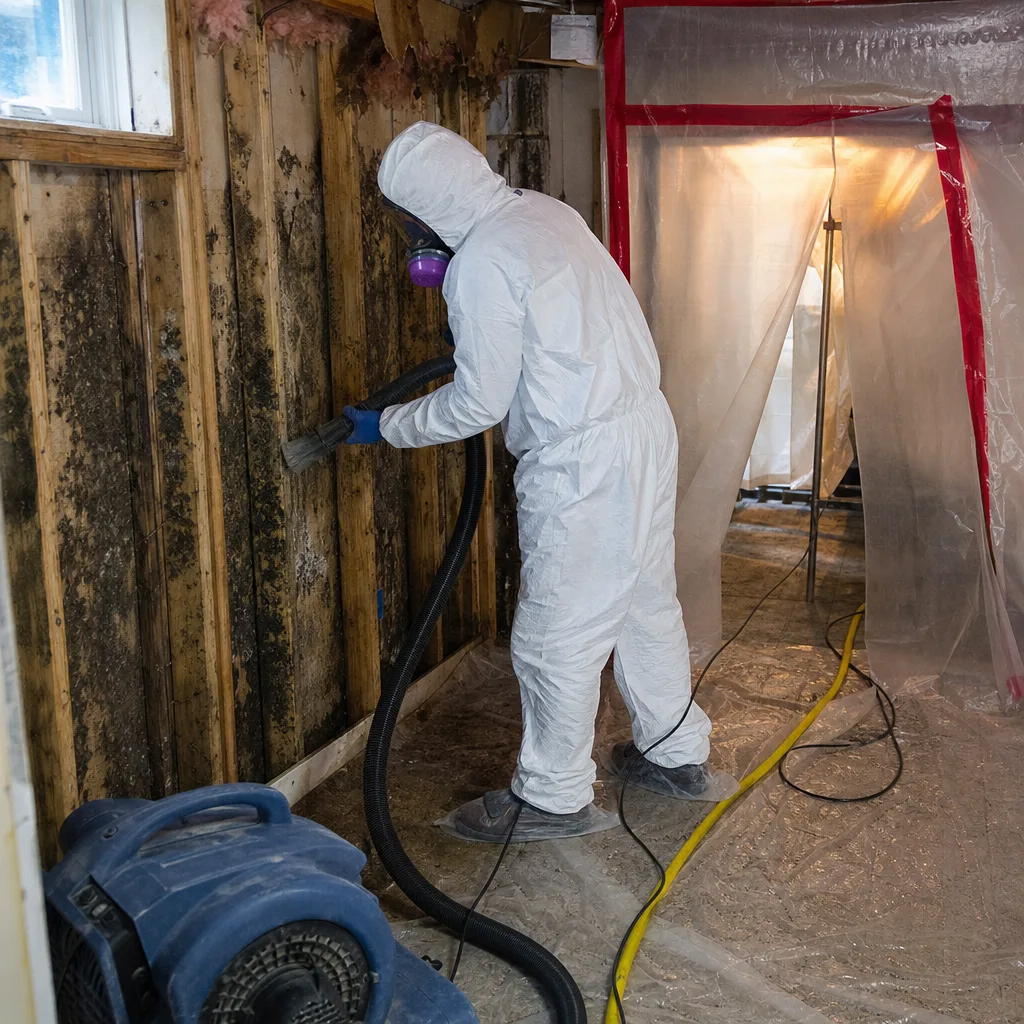
You need a Clark County building permit if the restoration involves structural members, exceeds 200 square feet of drywall replacement in a single room, or includes electrical, plumbing, or HVAC work. Most Category 2 and Category 3 water losses in Spring Valley cross at least one of these thresholds. Call (702) 430-2725 for a free assessment of your specific situation - estimates are free.
The licensed contractor performing the work is legally responsible for permit compliance under NRS Chapter 624. However, many restoration companies contractually shift this responsibility to the homeowner or a separate general contractor. Verify permit responsibility in writing before signing any agreement. DryMark Restoration Spring Valley pulls all required permits as part of our standard scope - it’s included in the written price, not added later.
Standard homeowner’s policies typically cover “necessary and reasonable” repair costs, which courts have interpreted to include permit fees required for compliant restoration. Code upgrade coverage varies by policy - some include ordinance or law coverage as a standard provision, others require a rider. We document code requirements in our written scope and work directly with adjusters to classify these costs correctly. Call (702) 430-2725 to review how your specific policy handles code upgrades.
Clark County offers same-day permit issuance for minor repairs with complete plans. Plan review for larger projects takes 5-10 business days. The inspection sequence itself - framing, rough-in, insulation, final - typically spans 2-4 weeks depending on inspector availability and whether re-inspections are required. We schedule inspections at the time of permit pull to prevent the delays that occur when contractors finish work and then discover inspector backlogs.
Unpermitted work discovered during a current restoration can complicate permitting for new work, as inspectors may require that prior work be brought to current code before signing off on repairs. We recommend a permit history search for any Spring Valley home built before 2000 or with visible signs of prior modification. If we find unpermitted work during our assessment, we document it photographically and present options for voluntary compliance that protect your future sale or claim eligibility.
Mold remediation itself does not require a building permit, but the structural repairs that follow remediation often do. Additionally, Nevada requires notification for mold projects exceeding 100 square feet of contiguous growth, and projects exceeding 1,000 square feet require a certified industrial hygienist. Mold remediation in Spring Valley frequently involves both the notification requirement and subsequent structural permits - we handle both tracks. Call (702) 430-2725 for a free evaluation of your mold situation.
The Bottom Line
Permits in Nevada restoration work are not administrative friction - they’re financial protection against future claim denial, sale complications, and lender liability. Clark County’s thresholds are specific and frequently crossed: 200 square feet of drywall, any structural member, any electrical or plumbing work. The specialty licensing requirements under NRS Chapter 624 create additional compliance layers for mold, asbestos, and HVAC work. “Like for like” insurance language and current building code often conflict, and the difference is claimable only if documented before work begins. Spring Valley’s soil, climate, and construction history create local conditions that inspectors know and scrutinize. Systematic documentation - moisture readings, photo records, written scopes, inspector logs - satisfies both county inspectors and insurance adjusters, turning restoration invoices into payment. Explore more guides & resources on protecting your Spring Valley property.able claims.
Written by Alicia Brennan, Owner at DryMark Restoration Spring Valley, serving Spring Valley since 2011.