
Last updated September 23, 2026
Free visual inspection and a written scope of work before any mitigation begins - photos, moisture readings, and drying logs go in your claim file
The scope we write is the scope we bill. Anything new gets shown to you, in writing, before we touch it.
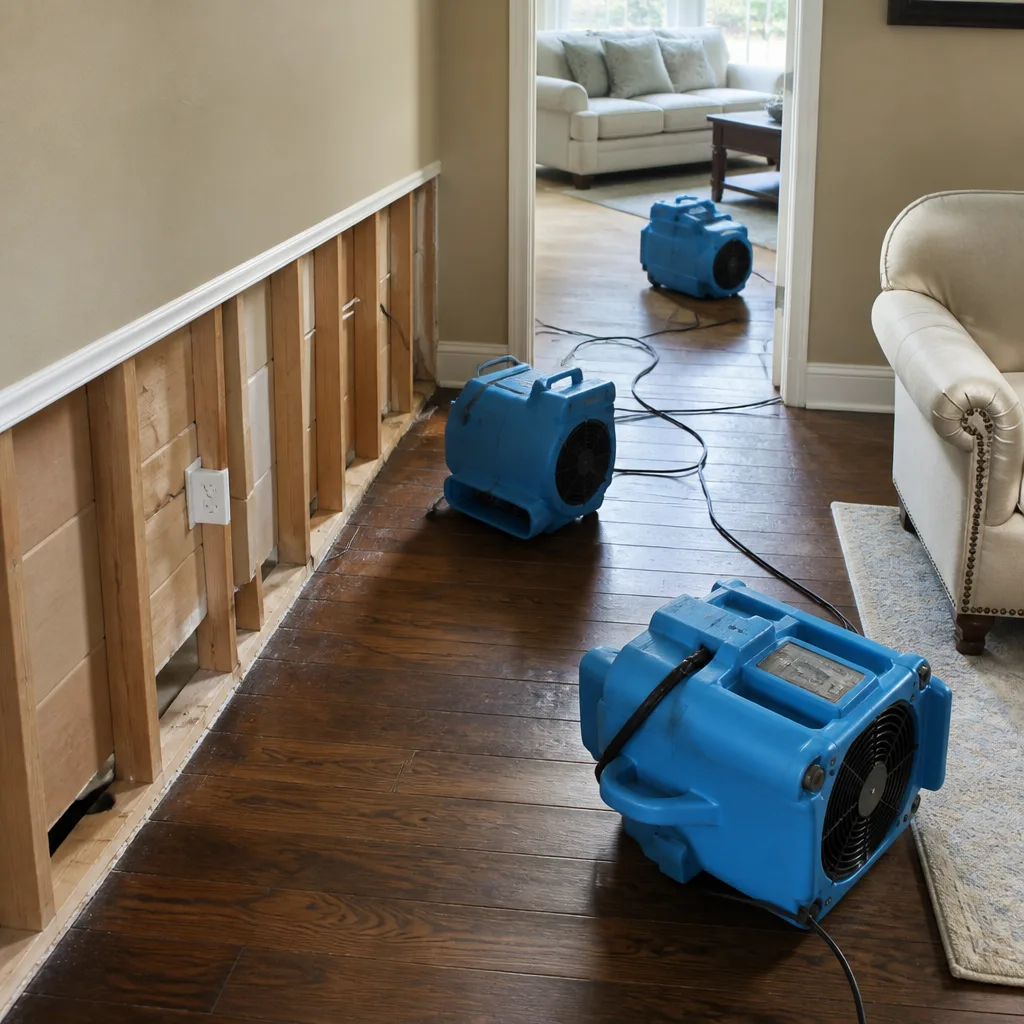

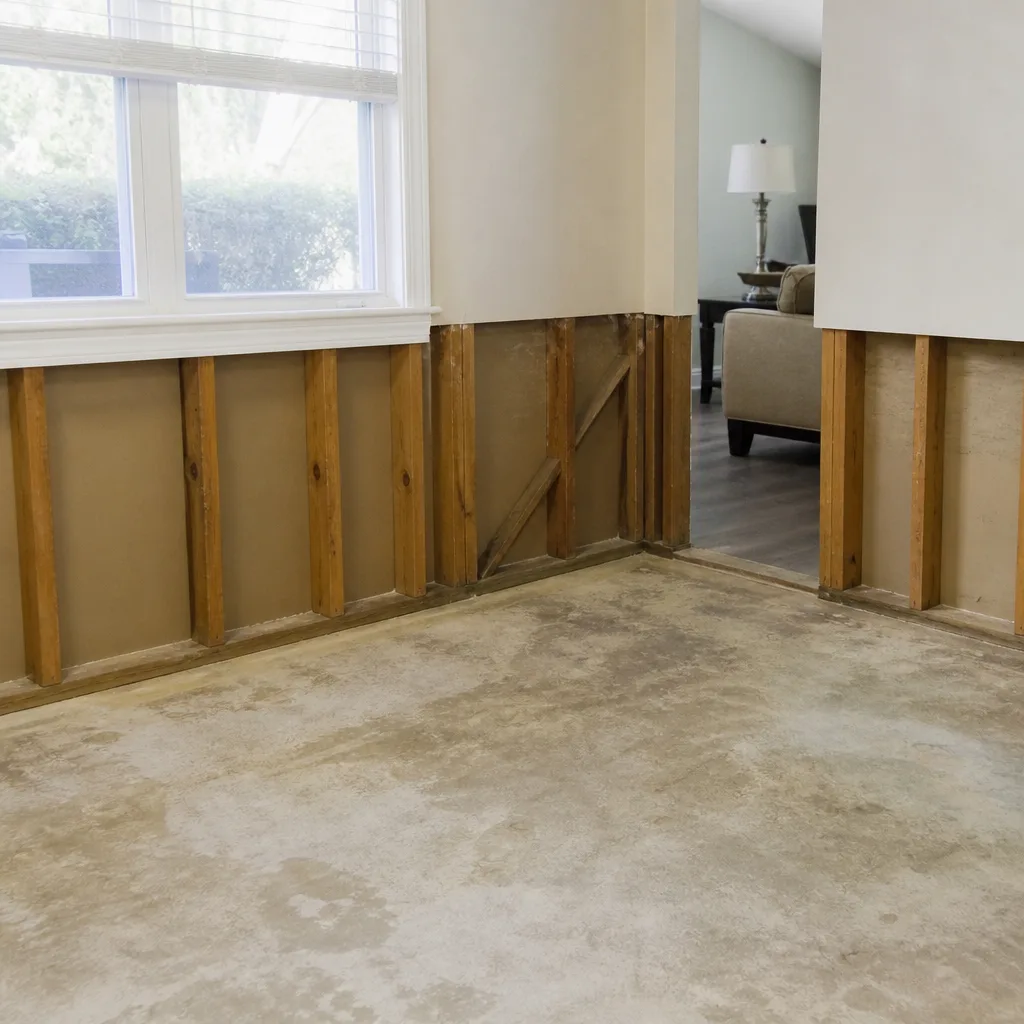


Water Damage Restoration Maintenance Checklist for Spring Valley Homeowners
Concrete slab homes dominate Spring Valley, and that’s exactly why standard water damage checklists fail here. Without a crawl space to inspect and no wooden subfloor to visibly rot, moisture migrates silently through expansion joints and weep screeds for months before showing surface symptoms. In our work across Spring Valley since 2011, we’ve documented cases where homeowners discovered water damage only after tile delaminated or baseboards swelled - by which point the moisture had already compromised the slab bond and created conditions for secondary mold growth. Our Water Damage Restoration team rebuilds this maintenance checklist from local failure data up, targeting the specific vulnerabilities of valley construction: slab foundations, tile-over-concrete flooring, stucco envelopes stressed by freeze-thaw and monsoon cycles, and interior humidity thresholds that mean something different at 2,400 feet elevation than they do at sea level.
Quick Answer
Spring Valley homeowners should inspect slab expansion joints and weep screeds quarterly, maintain interior relative humidity below 55% year-round, service water heaters and refrigerator ice lines on documented 3- and 5-year intervals, and photograph all findings with dated records. These records become evidence if a slow leak is later disputed as “long-term neglect” by an insurer.
Table of Contents
- Why Spring Valley Homes Fail Differently
- Slab Foundation Inspection Points
- Stucco Envelope: Monsoon and Freeze Protection
- Interior Humidity Thresholds and Monitoring
- Appliance Maintenance with Documented Intervals
- Creating Your Dated Maintenance Log
- Common Mistakes to Avoid
- When to Call a Professional
- Frequently Asked Questions
Why Spring Valley Homes Fail Differently
Most national water damage prevention guides - unlike our The Complete Guide to Damage Restoration in Spring Valley - assume wood-frame construction with basements or crawl spaces. That assumption misses the reality of Spring Valley’s housing stock, which is overwhelmingly slab-on-grade with tile or LVP installed directly over concrete. When a supply line leaks in this construction type, water doesn’t pool in a basement or saturate joists that announce trouble with visible rot. It moves laterally through the slab perimeter, wicks up through cold joints, or migrates beneath flooring where it remains hidden until adhesive failure or efflorescence appears.
The local climate compounds the problem. Spring Valley sits in the Las Vegas Valley at roughly 2,400 feet elevation with average annual rainfall of just 4.2 inches - but that rain arrives concentrated in July through September monsoons, often as high-intensity events that overwhelm scuppers, window wells, and improperly graded hardscape. Winter brings overnight lows below freezing in December through February, stressing stucco and caulking through repeated freeze-thaw cycles. The arid climate also creates a false sense of security: homeowners associate water damage with flood-prone regions, not with slow leaks in a desert environment where evaporation rates are high enough to hide ongoing moisture accumulation.
We’ve restored over 12,000 homes since 2011, and the pattern in Spring Valley is consistent. The most expensive claims we document aren’t from sudden pipe bursts - those are obvious, and homeowners call quickly. The costliest damage comes from slow leaks that went unobserved because the construction type concealed them and the climate evaporated surface evidence faster than the moisture accumulated. By the time visible symptoms appeared, the damage had spread to multiple rooms, compromised structural adhesives, and created conditions requiring full Mold Remediation in Spring Valley in addition to water damage restoration.
The checklist below addresses this specific risk profile. Each item targets a documented local failure point, includes measurable criteria for when action is needed, and produces a dated record that protects the homeowner if an insurer later questions whether damage was “sudden and accidental” or the result of neglected maintenance.
Slab Foundation Inspection Points
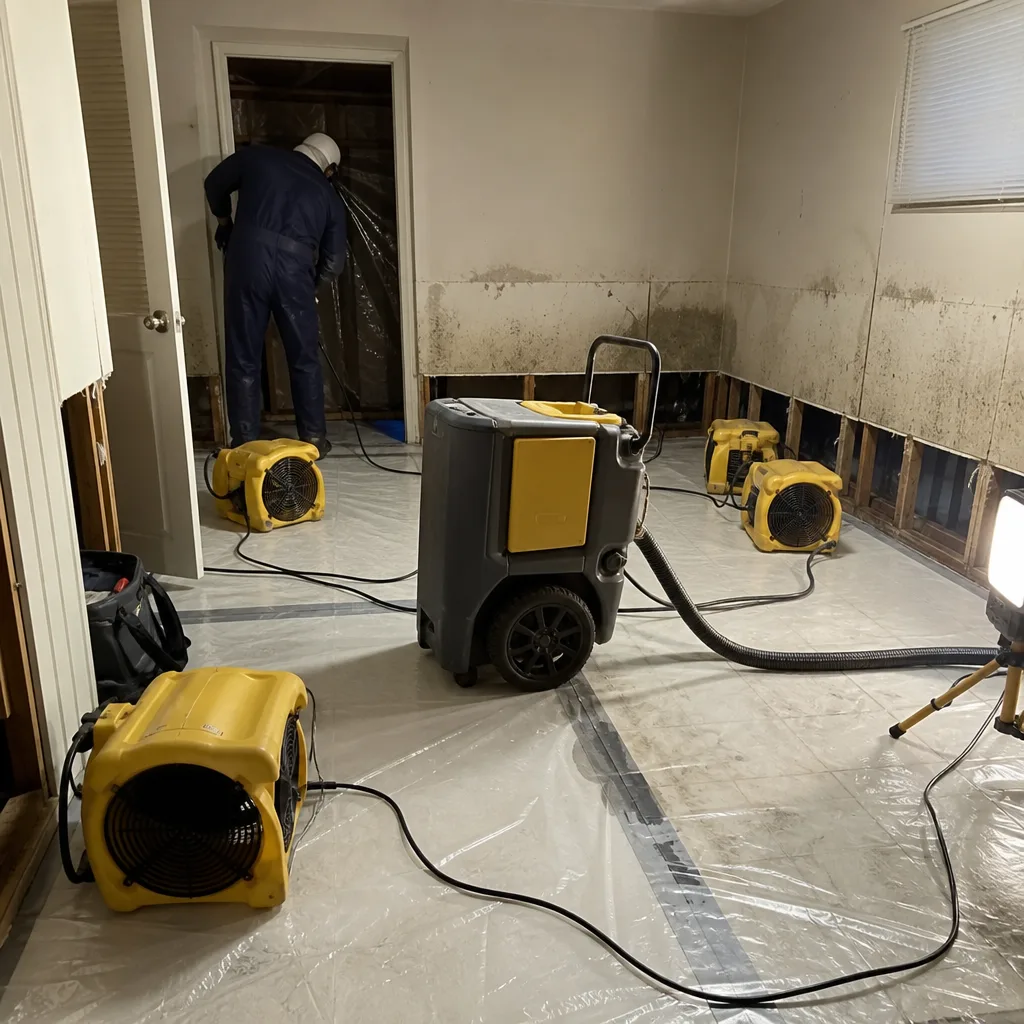
Slab-on-grade construction eliminates the crawl space inspection point that national checklists rely on. In its place, Spring Valley homeowners need a focused protocol for the features that replace it: expansion joints, weep screeds, cold joints, and the slab perimeter where it meets the stem wall.
Quarterly Inspection Protocol
- Expansion joints: Locate all visible expansion joints in the slab, typically found at perimeter walls, column lines, and where additions meet original construction. Photograph each joint with a date stamp. Look for sealant that has pulled away from either side, cracking that runs perpendicular to the joint direction, or staining that suggests moisture has traveled through the joint cavity. If sealant has failed, note the linear feet affected and schedule repair within 30 days. Unsealed expansion joints allow monsoon runoff and landscape irrigation to enter the slab edge.
- Weep screeds: These are the metal or plastic strips at the base of stucco walls that allow moisture within the wall cavity to drain outward. In Spring Valley, weep screeds are frequently buried by soil, mulch, or hardscape that has settled or been added after construction. Expose the full length of each weep screed and verify that the bottom edge remains open to air. If the screed is blocked, moisture that enters during monsoon events or from irrigation overspray cannot escape; it accumulates in the wall cavity and migrates downward to the slab edge. Document any blockage with photos and note the location.
- Efflorescence mapping: White, powdery deposits on concrete or stucco surfaces indicate soluble salts carried to the surface by moisture migration. In Spring Valley’s hard water environment, efflorescence is common and not always active - but new efflorescence, or efflorescence that reappears after cleaning, signals ongoing moisture movement. Photograph all efflorescence locations, note whether the deposit is powdery (active) or crystalline and hard (older, possibly inactive), and track changes between inspections. Active efflorescence on interior slab surfaces or at baseboards demands immediate investigation.
- Slab perimeter grading: Walk the full exterior perimeter and verify that soil or hardscape slopes away from the foundation at minimum 6 inches of drop over 10 feet. In Spring Valley’s clay-heavy soils, settling is common, and homeowners often add decorative rock or pavers that create a flat or negative slope. Use a level or string line to measure if visual inspection is uncertain. Negative grading directs monsoon runoff and irrigation water against the slab edge, where it can enter through construction joints or deteriorated sealant.
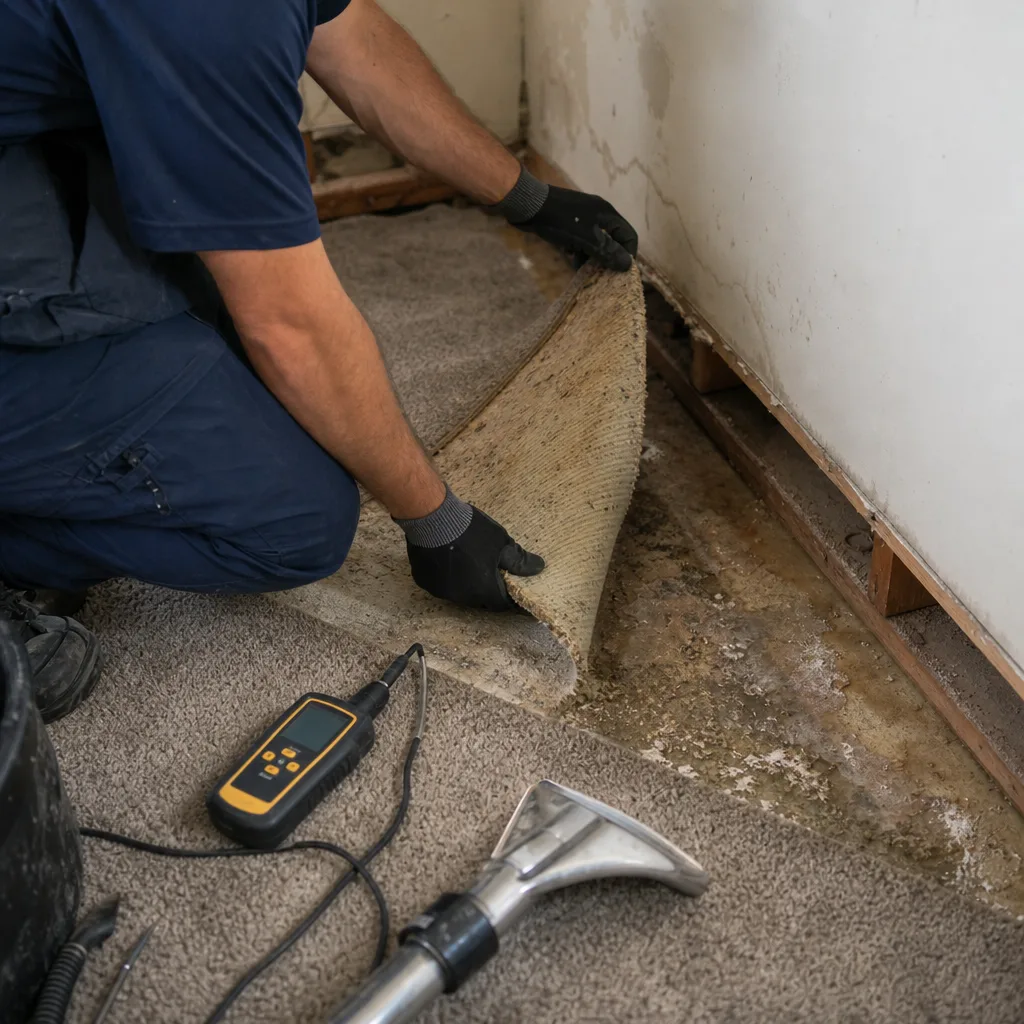
- Interior tile and flooring: Inspect tile floors for hollow sounds when tapped with a hard object, indicating delamination from the slab. Check LVP and laminate for cupping at plank edges or soft spots underfoot. In slab construction, these symptoms indicate moisture at the slab surface or within the flooring assembly - often from a slab leak or moisture vapor drive from below. Document with photos and moisture meter readings if available.
Record all findings in your maintenance log with dates, photos, and any measurements taken. This documentation transforms routine inspection into evidence if a claim arises.
Stucco Envelope: Monsoon and Freeze Protection
Stucco dominates Spring Valley exteriors, and it performs well in the desert climate when properly maintained. But the same properties that make stucco durable - its hardness, thickness, and breathability - also make it unforgiving of cracks and sealant failures. Water that enters a stucco wall doesn’t quickly dry if the weep path is blocked or if interior vapor barriers prevent outward diffusion.
Pre-Monsoon Inspection (June)
Complete this inspection by early June, before the July-September monsoon season:
- Hairline crack assessment: Stucco develops hairline cracks from thermal expansion and minor settlement. Cracks narrower than 1/16 inch that are clean and unaccompanied by staining are typically cosmetic. Wider cracks, cracks that run in stair-step patterns near openings, or any crack with dark staining or efflorescence at its base indicate active water entry. Photograph and measure all cracks; repair cracks wider than 1/16 inch with elastomeric stucco patch before monsoon season.
- Penetration sealant: Every pipe, vent, light fixture, and hose bib that passes through stucco represents a potential water entry point. Inspect sealant at each penetration for cracking, shrinkage, or separation from either the stucco or the penetration itself. Spring Valley’s intense UV and thermal cycling degrade sealant faster than in milder climates. Replace failed sealant with a high-quality polyurethane or silicone sealant rated for exterior use in desert conditions.
- Window and door flashing: Check that weep holes in window and door tracks are open and that flashing above openings directs water outward, not behind the stucco. In Spring Valley, we’ve documented numerous cases where improper flashing or sealed weep holes directed monsoon water into wall cavities, with damage appearing months later at interior baseboards or ceiling corners.
- Roof-to-wall intersections: Inspect step flashing and counterflashing where roof planes meet stucco walls. These are high-stress areas in wind-driven monsoon rain. Look for lifted flashing, deteriorated sealant, or gaps where the stucco meets the metal.
Post-Freeze Inspection (March)
After the December-February freeze period, complete this additional check:
- Caulk and sealant flexibility: Press on sealant at penetrations and control joints. Sealant that has hardened, cracked, or lost adhesion after freeze exposure needs replacement before the next thermal cycle season.
- Stucco spalling: Look for areas where the stucco surface has flaked or chipped, exposing the brown coat beneath. Freeze-thaw damage to stucco is less common in Spring Valley than in colder climates, but it occurs where water has entered and frozen against the interior face of the stucco. Spalling near grade or at roof-wall intersections suggests a drainage or flashing defect that allowed water to saturate the stucco.
Interior Humidity Thresholds and Monitoring
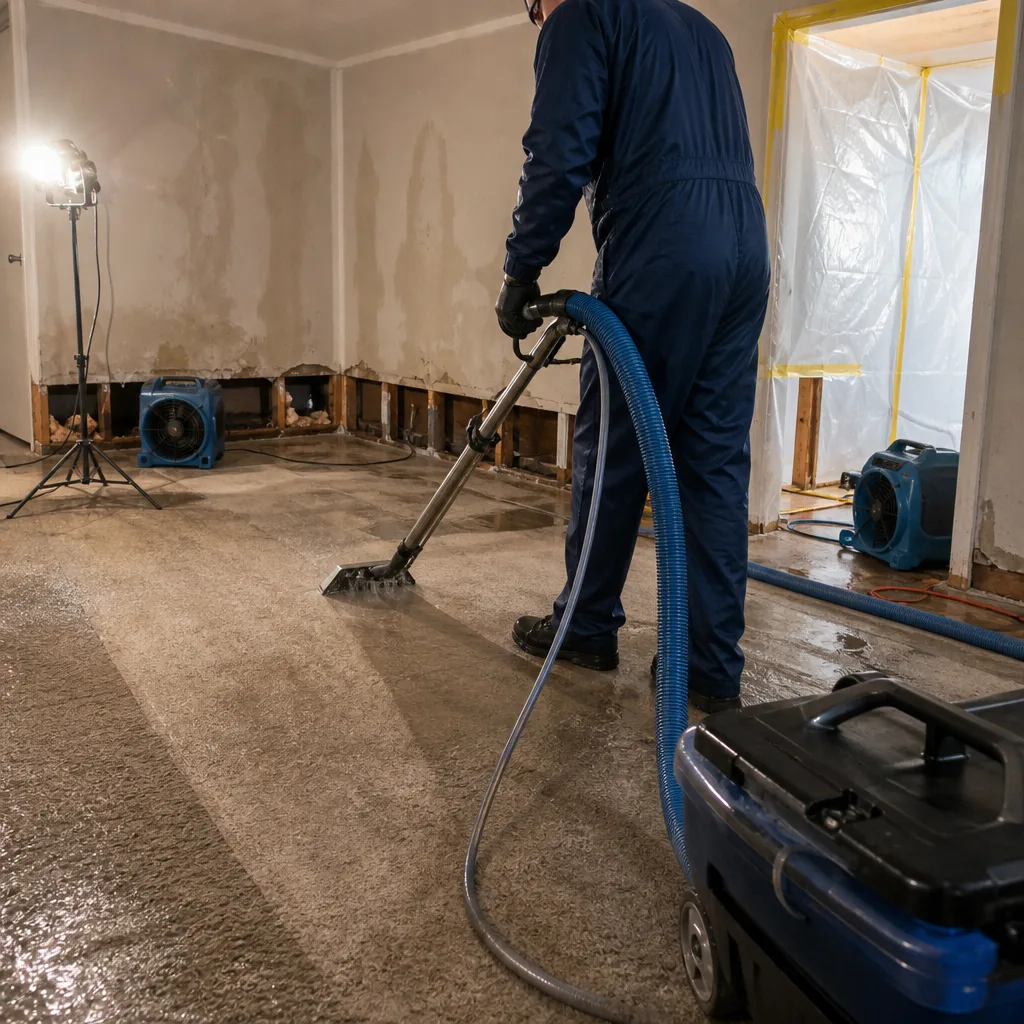
Relative humidity recommendations from coastal or humid-climate sources don’t translate directly to Spring Valley. In a coastal home, 55% RH might indicate poor ventilation or a hidden leak. In a Spring Valley home with slab-on-grade construction and tile flooring, 55% RH sustained over multiple days almost certainly indicates an active moisture source - because the arid climate and air conditioning should keep interiors well below that threshold.
Target Readings by Season
| Season | Target RH Range | Action Threshold | Likely Cause if Elevated |
|---|---|---|---|
| Winter (Dec-Feb) | 30-45% | >50% sustained 48+ hours | Slab moisture, HVAC imbalance, concealed leak |
| Spring (Mar-May) | 25-40% | >45% sustained 48+ hours | Irrigation intrusion, early monsoon moisture, appliance leak |
| Monsoon (Jul-Sep) | 35-50% | >55% sustained 48+ hours | Envelope breach, active leak, inadequate dehumidification |
| Fall (Oct-Nov) | 25-40% | >45% sustained 48+ hours | Summer accumulation now visible, HVAC transition issues |
We recommend placing calibrated hygrometers in three locations: the master bedroom (representative of conditioned living space), the laundry room or area nearest the water heater, and the kitchen near the refrigerator. Log readings weekly during routine inspection, and daily if any reading exceeds the action threshold. Sustained elevation above threshold demands investigation with a moisture meter on surrounding surfaces and, if no source is visible, professional leak detection.
The psychrometric data matters for documentation. When we respond to water damage calls in Spring Valley, one of the first measurements our technicians take is the vapor pressure differential - the difference between the moisture content of interior air and the moisture content the air can hold at its current temperature. A low differential in a home with elevated RH indicates that the air is nearly saturated relative to its temperature, which means evaporation from wet materials is slowed and drying will require mechanical dehumidification. Documenting your own hygrometer readings creates a baseline that helps professionals assess whether conditions have changed and how quickly materials will dry.
For homeowners with smart thermostats or humidity monitoring systems, export and save monthly data reports. These automated records are admissible evidence in claim disputes and require no manual logging effort.
Appliance Maintenance with Documented Intervals
Appliance supply lines and drain connections are the leading source of residential water damage nationwide, and Spring Valley is no exception. But the local water chemistry and construction type create specific risks. Hard water accelerates valve and seal deterioration. Slab construction means that a leak at any appliance can migrate broadly before detection, with no basement to contain it.
Water Heater
Spring Valley’s hard water (typically 12-18 grains per gallon) deposits scale on heating elements and accelerates tank corrosion. The absence of a drain pan in many slab homes means that tank failure floods directly onto the slab.
- Annual: Test temperature-pressure relief (TPR) valve by lifting the lever and verifying discharge. Inspect the discharge pipe for proper routing to a visible location, not into a hidden drain. Photograph the test.
- Every 3 years: Drain and flush tank to remove sediment. In hard water areas, this interval is maximum; every 2 years is preferable. Document with photo of discharged water clarity.
- At 8 years: Replace the anode rod, or replace the entire unit if the tank shows any external corrosion, wet spots, or TPR valve weeping. Tank failure rates rise sharply after 10 years in hard water conditions.
- Always: Verify that a drain pan is installed beneath the tank, piped to a visible discharge location. If your home lacks this, installation is a priority project.
Refrigerator Ice Line
The 1/4-inch plastic or copper line to refrigerator icemakers is a frequent failure point, often located behind the refrigerator where leaks go undetected for extended periods.
- Every 3 years: Replace the supply line with a braided stainless steel line, even if the existing line appears intact. Plastic lines become brittle with age and hard water exposure; we’ve documented failures in lines that appeared fine at visual inspection.
- Annual: Pull refrigerator from wall, inspect line and connection for moisture, mineral deposits, or kinking. Photograph the connection.
- At connection: Verify that a shutoff valve is accessible and functional. If the only shutoff is at the main water supply, consider installing a dedicated valve behind the refrigerator.
Dishwasher
- Annual: Inspect under-sink supply connection and drain hose for moisture, corrosion, or hose cracking. Check that the drain hose high loop is properly secured to prevent backflow.
- Every 5 years: Replace supply hose, even braided stainless, as internal deterioration isn’t visible externally.
- Monthly: Run a cleaning cycle and inspect filter for debris that could cause backup and overflow.
Washing Machine
- Every 3 years: Replace rubber supply hoses with braided stainless steel. Rubber hoses fail catastrophically without warning after 3-5 years of use.
- Annual: Inspect hose connections, drain hose securement, and floor beneath for any moisture. Verify that the drain hose is properly inserted in the standpipe without airtight seal that could cause overflow.
Document each maintenance action with date, description, and photo. These records are the primary defense against insurer claims of “long-term neglect” when a supply line fails within its rated service life.
Creating Your Dated Maintenance Log
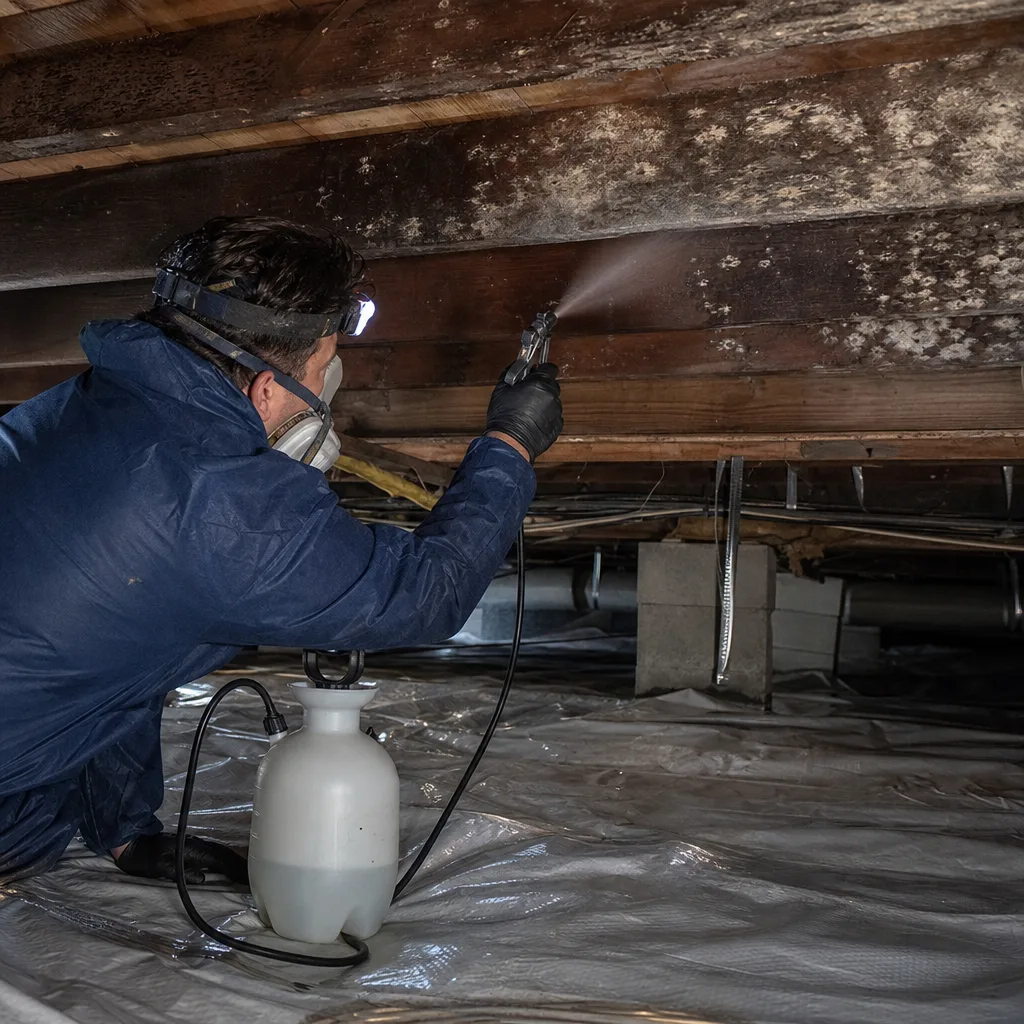
The maintenance log serves two purposes: it ensures that inspection and maintenance actually occur on schedule, and it creates a documentary record that transforms routine homeowner diligence into evidence admissible in insurance disputes. In our experience with over 12,000 restoration jobs - detailed in our Damage Restoration Cost Breakdown: The Spring Valley Homeowner’s Reference for 2026 - the claims most often disputed as “gradual damage” or “maintenance neglect” are those where the homeowner has no contemporaneous documentation of inspection or response to early warning signs.
Log Format
We recommend a simple digital format - a cloud-stored document or spreadsheet - with these columns:
- Date: Exact date of inspection or maintenance action.
- Location/Item: Specific address within the property, e.g., “Water heater, garage,” “Expansion joint, north wall living room,” “Weep screed, east exterior wall.”
- Action: “Inspected,” “Replaced,” “Repaired,” “Cleaned,” or “Professional service.”
- Finding: Objective description: “No visible moisture, sealant intact,” “Efflorescence 6 inches wide at base of wall, photographed,” “Hose connection dry, no corrosion.”
- Measurement: Any quantitative data: hygrometer reading, moisture meter reading, linear feet of crack, appliance age from serial number.
- Photo filename: Reference to dated photo stored in accompanying folder.
- Next action/date: Scheduled follow-up based on finding or routine interval.
Photo Documentation Standards
Photos should include a date stamp (camera setting or photo app metadata) and a recognizable reference point. For interior shots, include a wall outlet or switch plate for location verification. For exterior shots, include a house number or distinctive landscaping feature. Store photos in folders by year and month, with filenames that include date and subject: “2024-03-15_WaterHeater_TPRtest.jpg.”
This is the standard we apply to our own work. Every Water Damage Restoration in Spring Valley job we complete includes a photo record on every visit, documented to IICRC, RIA, and IFA standards. The daily drying logs we produce - with psychrometric data, moisture readings by room, and material classifications - are what turn restoration invoices into claims insurers pay without dispute. Your maintenance log applies the same documentation discipline to prevention.
If you ever need to invoke your coverage, your log becomes evidence that you maintained the property diligently and responded promptly to warning signs. In disputes over whether damage was “sudden and accidental” or gradual, this documentation often determines coverage.
Common Mistakes to Avoid
- Assuming desert dryness prevents water damage. Spring Valley’s low average rainfall masks concentrated monsoon intensity and creates false confidence. The damage we document most often comes from slow leaks in arid conditions, not flooding from storm events.
- Inspecting only visible areas. In slab construction, the most critical moisture pathways are hidden: beneath flooring, within wall cavities, at the slab perimeter below grade. A checklist that only addresses visible plumbing fixtures misses the dominant local failure modes.
- Using national humidity guidelines without adjustment. Recommendations to maintain 30-50% RH year-round are appropriate for humid climates. In Spring Valley, sustained readings above 45% in spring or fall, or above 50% in winter, indicate an active problem requiring investigation - not a target to approach.
- Neglecting weep screed maintenance. Buried or painted-over weep screeds are epidemic in Spring Valley. Homeowners add soil, install landscaping, or paint for aesthetics without understanding that blocked weep paths trap moisture in walls. This is a leading cause of stucco failure and interior damage we encounter.
- Replacing appliances without replacing supply lines. A new water heater connected with a 10-year-old copper line, or a new refrigerator with the original plastic icemaker line, preserves the highest-risk component. Replace lines on documented intervals independent of appliance replacement.
- Failing to create contemporaneous records. Memory is not evidence. Photos taken after damage occurs, or logs created retroactively, carry no weight in coverage disputes. The maintenance log only protects you if maintained in real time, with dated entries and photos.
- Ignoring efflorescence as “just desert staining.” White deposits at slab edges or stucco bases are often dismissed as cosmetic in Spring Valley’s hard water environment. Active, powdery efflorescence that reappears after cleaning indicates ongoing moisture migration that will eventually damage materials and create mold-conducive conditions.
When to Call a Professional
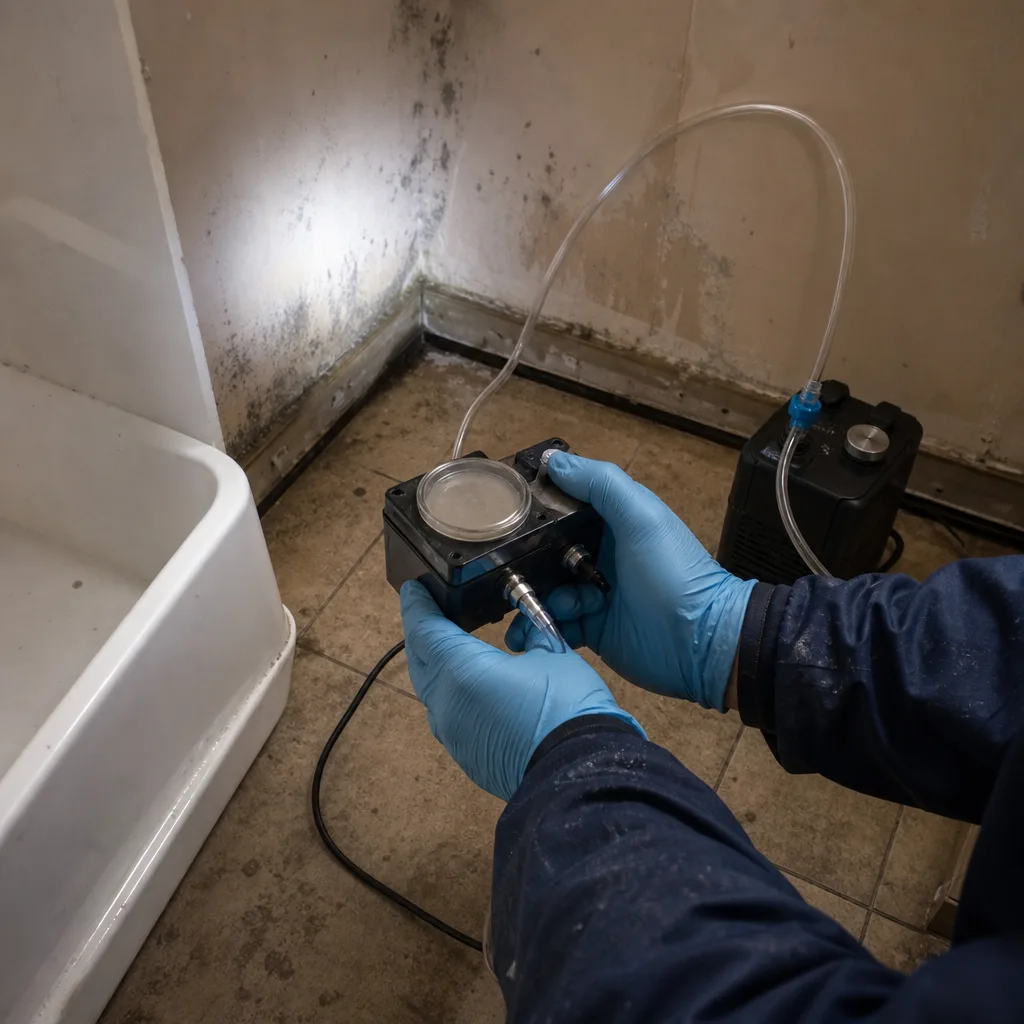
Some indicators exceed homeowner inspection scope and require professional assessment with moisture meters, thermal imaging, and leak detection equipment. Call for evaluation if you observe: sustained interior relative humidity above 55% with no identifiable source; efflorescence that reappears within 30 days of cleaning; hollow or delaminated tile over any area exceeding 2 square feet; water heater TPR valve that discharges repeatedly or fails to reseat; any moisture or staining at baseboards, ceiling corners, or wall-floor junctions that recurs after surface drying; or washing machine or dishwasher supply hoses exceeding 5 years age without replacement record.
Professional assessment should include documented moisture readings, thermal imaging to trace moisture pathways, and a written scope of any remediation needed. At DryMark Restoration Spring Valley, we provide free estimates in Spring Valley with a written price before any work begins - Haven Standard, Clause 1. Our assessments include photo documentation and, where appropriate, direct coordination with your insurance adjuster. Call (702) 430-2725 to schedule.
Frequently Asked Questions
Complete the full checklist quarterly, with focused appliance inspections monthly and pre-monsoon and post-freeze envelope inspections annually. This frequency targets Spring Valley’s specific risk profile: monsoon concentration, freeze-thaw cycling, and slab construction that conceals slow leaks. Quarterly inspection catches most developing issues before they become major damage, while producing the dated documentation that protects you in claim disputes.
Sustained relative humidity above 50% in winter, above 45% in spring or fall, or above 55% during monsoon season indicates an active moisture source requiring investigation. These thresholds are lower than national guidelines because Spring Valley’s arid climate and air conditioning should maintain interiors well below them. A reading that would be normal in coastal Florida is abnormal here and signals concealed moisture.
Coverage depends on whether the damage is documented as “sudden and accidental” or determined to result from “long-term neglect.” Most policies exclude gradual damage but cover sudden events. Your maintenance log - with dated inspections, photos, and prompt response to warning signs - is the evidence that distinguishes diligent ownership from neglect. Without documentation, insurers frequently deny slow-leak claims regardless of actual homeowner behavior. Call (702) 430-2725 for a free second opinion on any written estimate or coverage question.
Indicators specific to Spring Valley slab construction include: tile that sounds hollow when tapped or has cracked along grout lines; warm spots on tile floors (hot water line leak); unexplained increase in water bill; water heater that cycles frequently without use; or moisture meter readings above 4% on flooring materials. Professional leak detection uses acoustic equipment and thermal imaging to locate slab leaks without destructive investigation. We recommend professional assessment if two or more indicators are present.
Buried weep screeds and blocked expansion joints. These are unique to local construction and climate, absent from national checklists, and invisible to casual inspection. When weep screeds are buried by landscaping or expansion joint sealant fails, moisture enters the slab edge and wall cavity with no visible exterior sign until interior damage appears months later. Our pre-monsoon inspection protocol targets these specifically.
Every job includes a photo record on every visit, daily drying logs with psychrometric data and moisture readings by room, and a written scope agreed before work begins. This documentation is produced to IICRC, RIA, and IFA standards and is designed specifically to support insurance claim submission. We also coordinate directly with adjusters when requested. The 365-Day Done Right Promise under The Haven Standard provides written warranty coverage if any issue arises after completion.
The Bottom Line
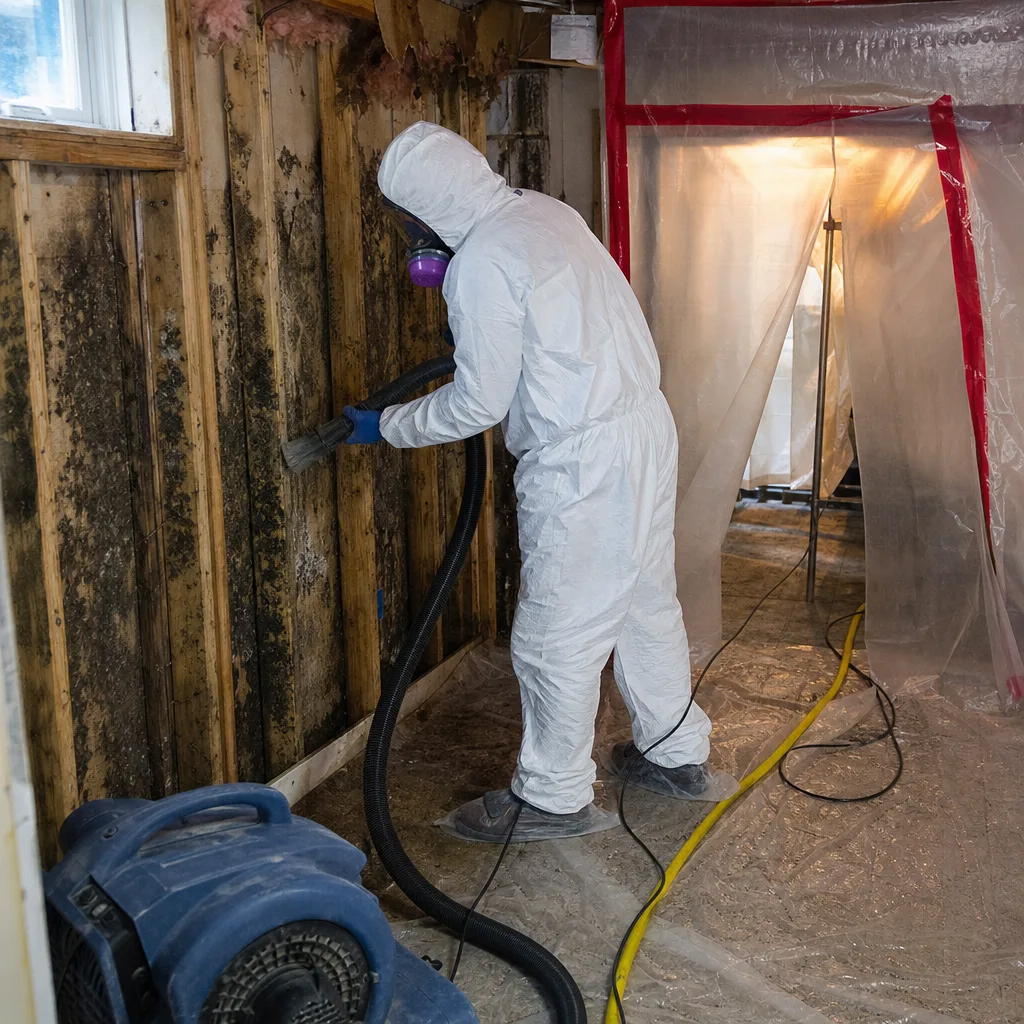
Water damage prevention in Spring Valley requires a checklist built from local construction realities, not national assumptions. Slab foundations, stucco envelopes, hard water, and monsoon concentration create a specific risk profile that generic guidance misses. The homeowners we see fare best are those who inspect quarterly with measurable criteria, maintain appliances on documented intervals, and produce a contemporaneous record that transforms routine diligence into claim-protecting evidence. For additional help, see our more guides & resources. The maintenance log is not bureaucratic overhead - it is the documentation that determines whether your coverage responds when you need it.
At DryMark Restoration Spring Valley home, we’ve built our practice on the same documentation discipline we recommend here: written price before work begins, photo record on every visit, and daily drying logs that turn restoration into payable claims. If you discover indicators beyond your inspection scope, or need professional assessment of moisture conditions, we offer free estimates in Spring Valley with no obligation. Call (702) 430-2725 to speak with a live person - no voicemail, no callback queue - or to schedule assessment. For Fire & Smoke Damage Restoration in Spring Valley and our full range of services, we’re available 24 hours a day, 7 days a week.
Written by Alicia Brennan, Owner at DryMark Restoration Spring Valley, serving Spring Valley since 2011.